LVDS to MIPI CSI-2 Bridge Board for i.MX8M Plus
Converts LVDS video from Sony FCB, Tamron, and KT&C block cameras into 4-lane MIPI CSI-2.
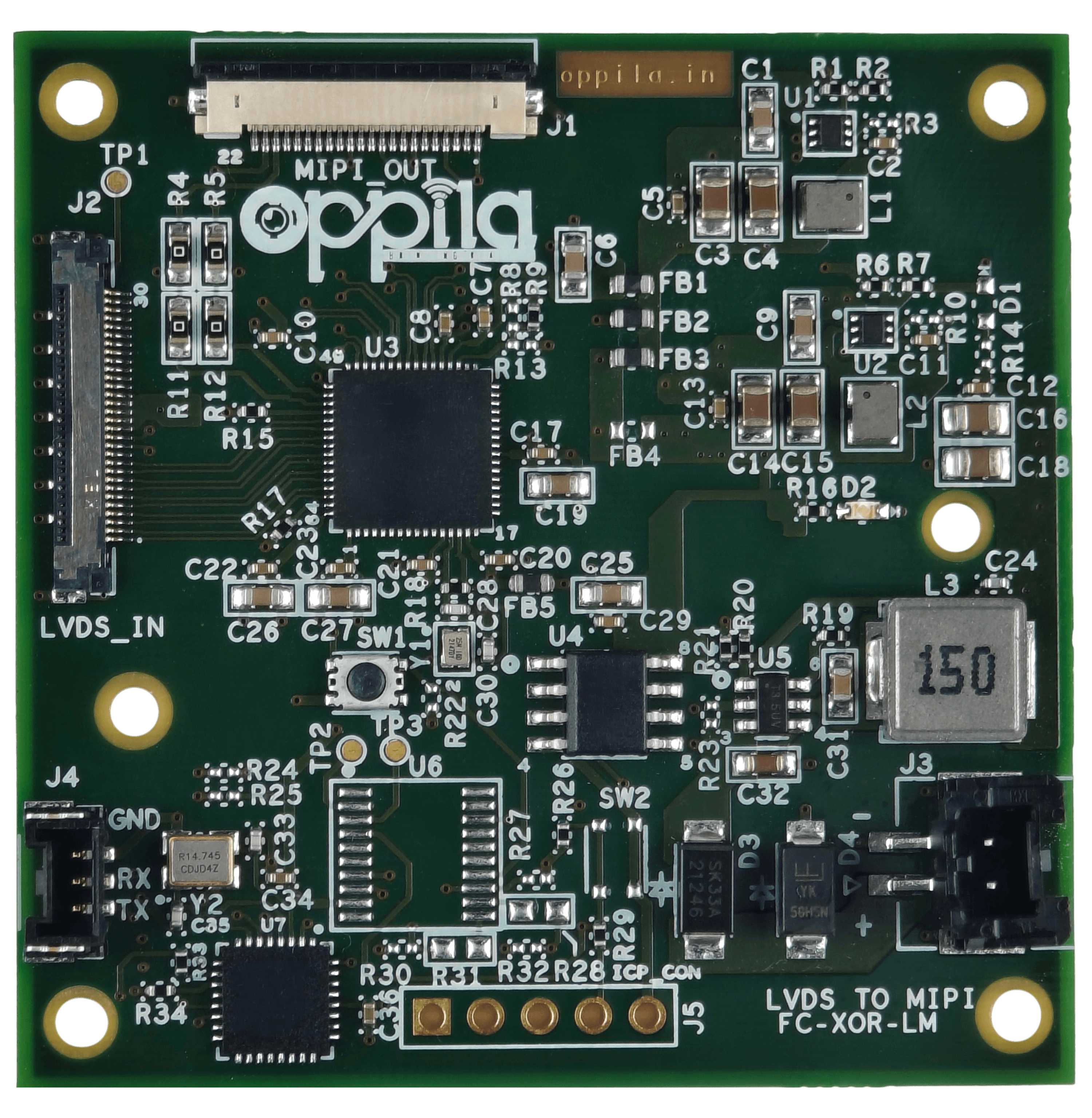
LVDS to MIPI CSI-2 Bridge Board
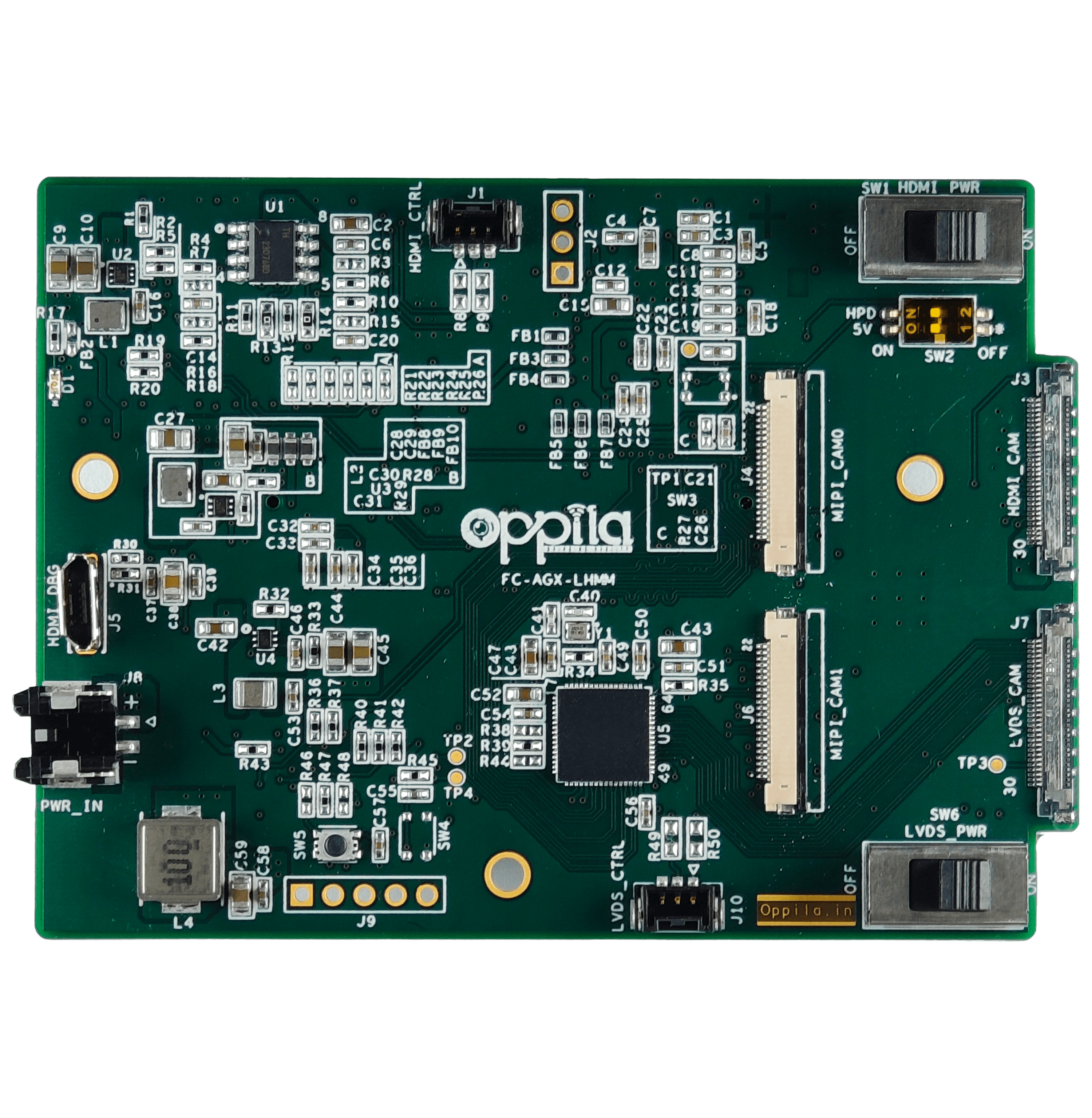
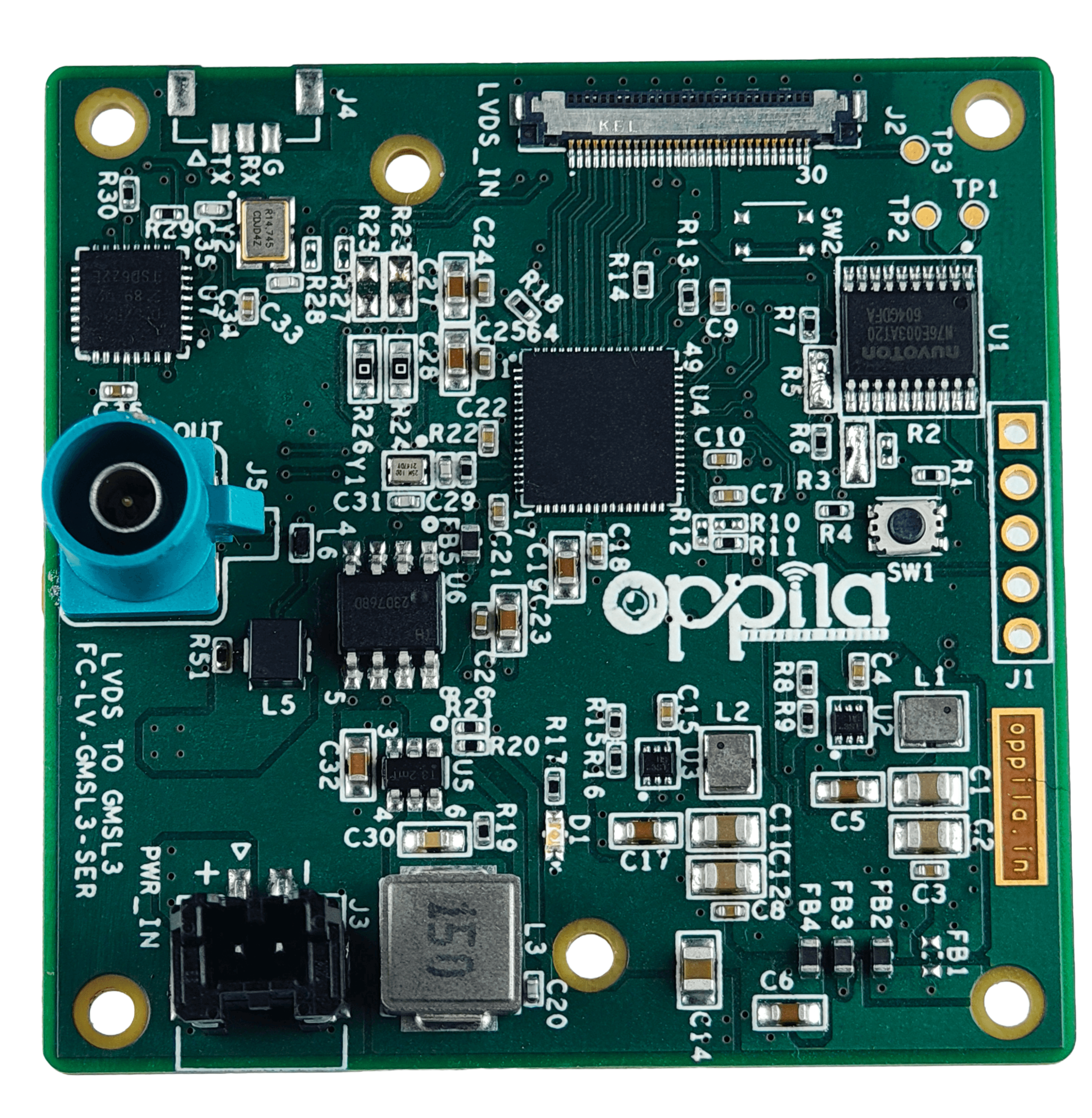
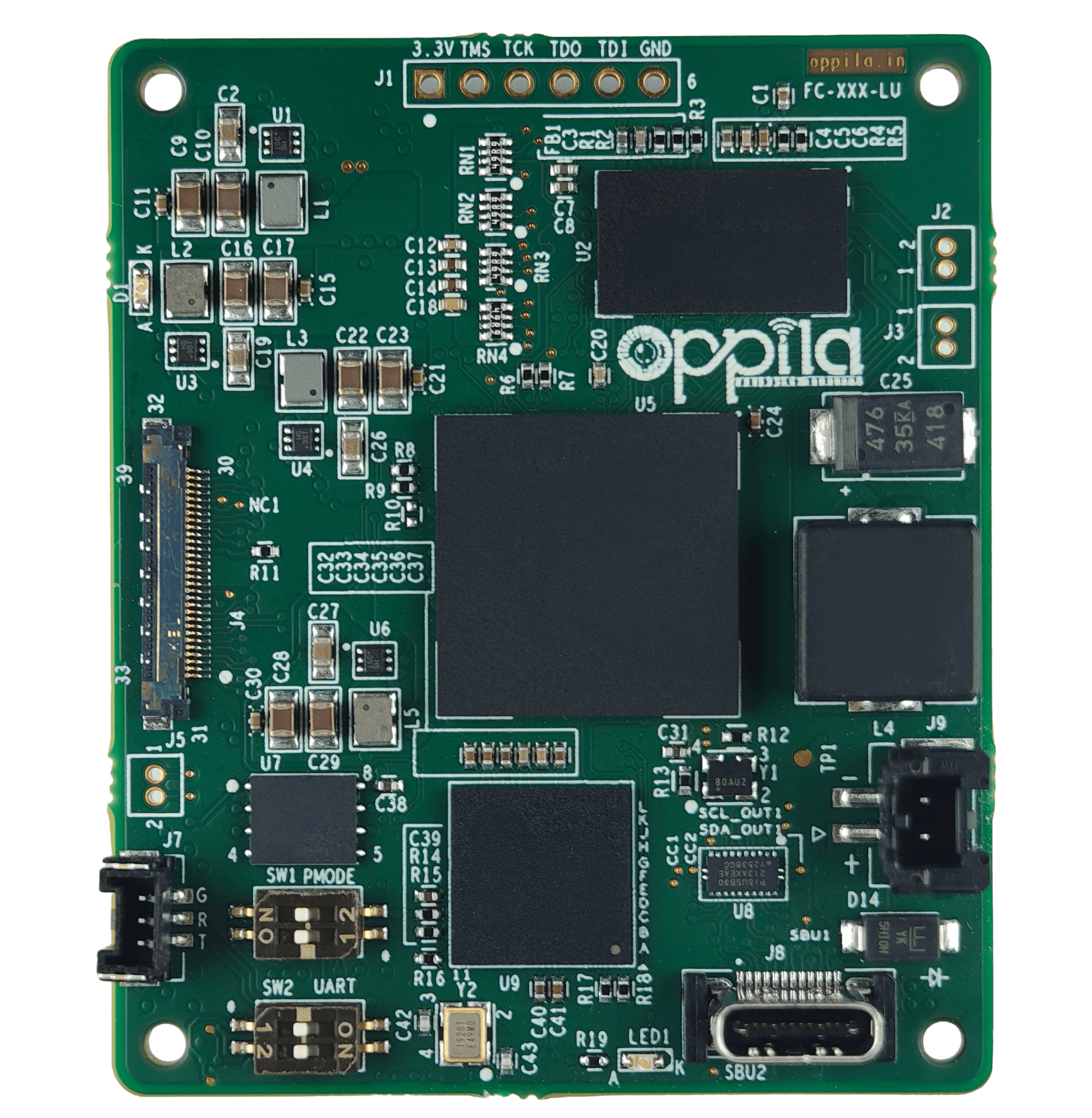
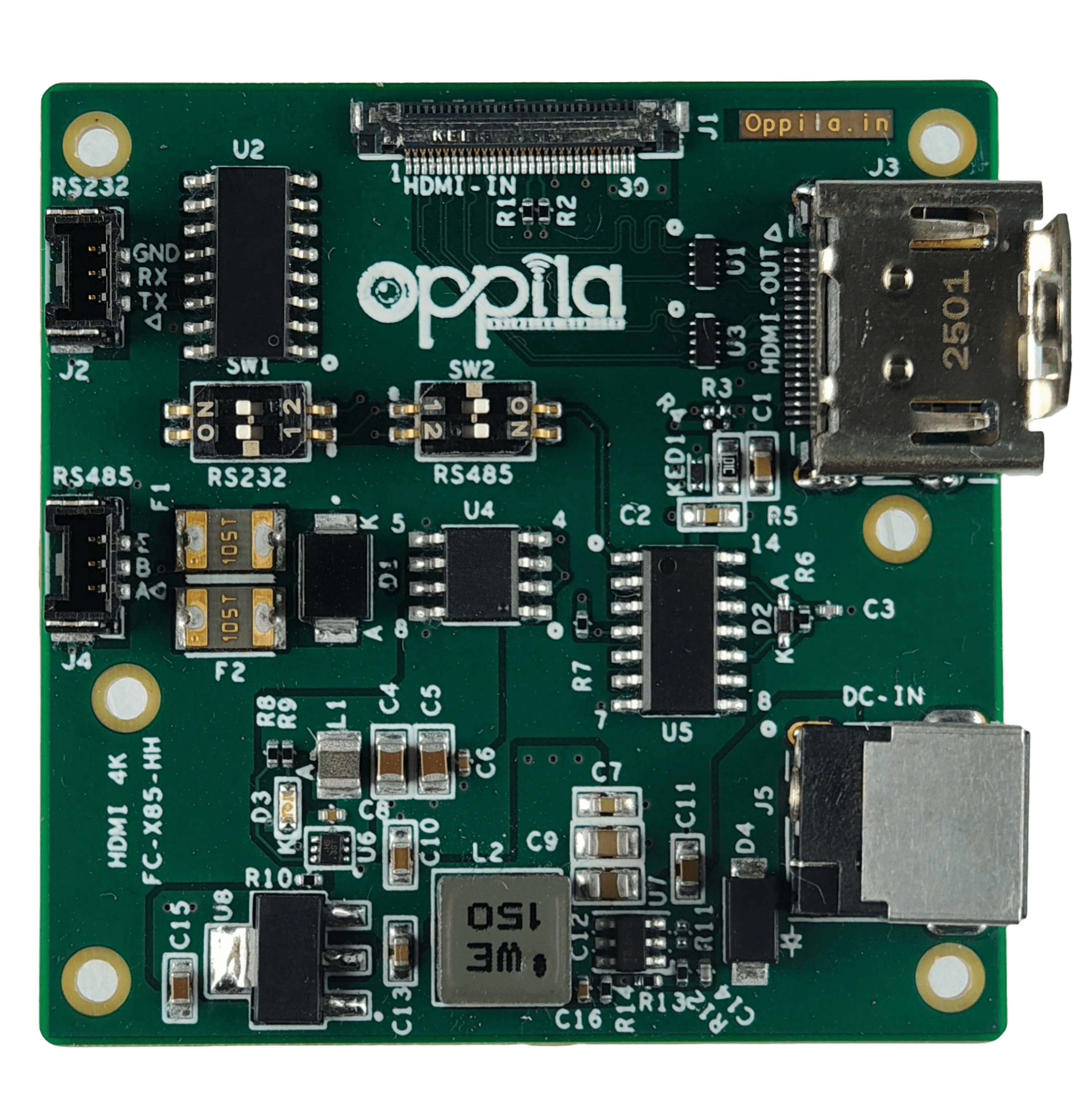
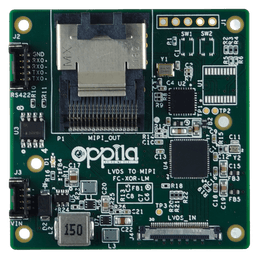
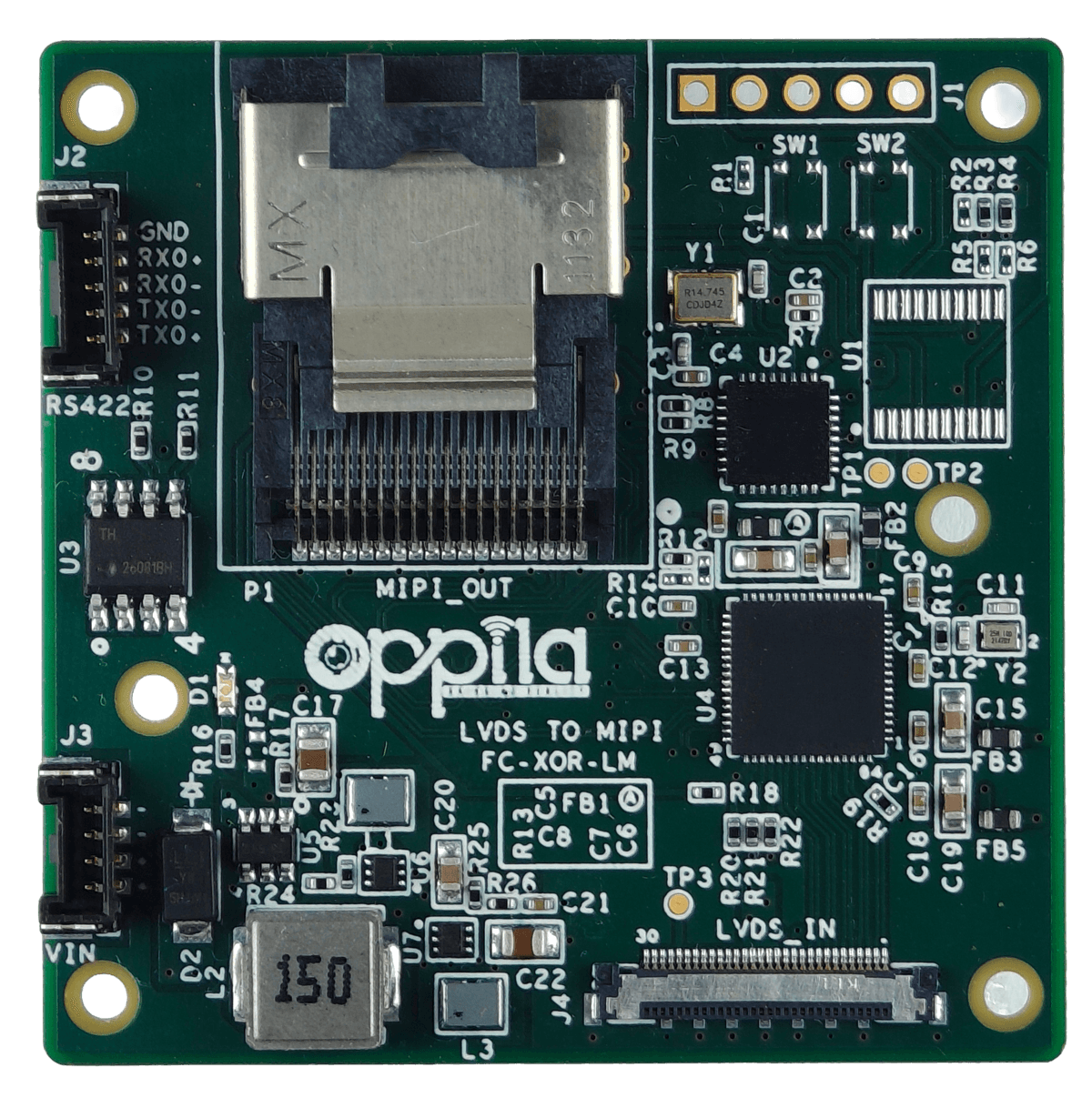
The LVDS–MIPI CSI-2 Bridge Board is a compact, high-performance camera interface bridge designed to convert LVDS video output from Sony and Tamron LVDS block cameras into a MIPI CSI-2 signal compatible with leading embedded AI computing platforms.
- Compatible pinouts with Sony, Tamron, Wonwoo, Skoopia, Videology, KT&C LVDS block cameras.
- Converts LVDS video signals to 4-lane MIPI CSI-2 output
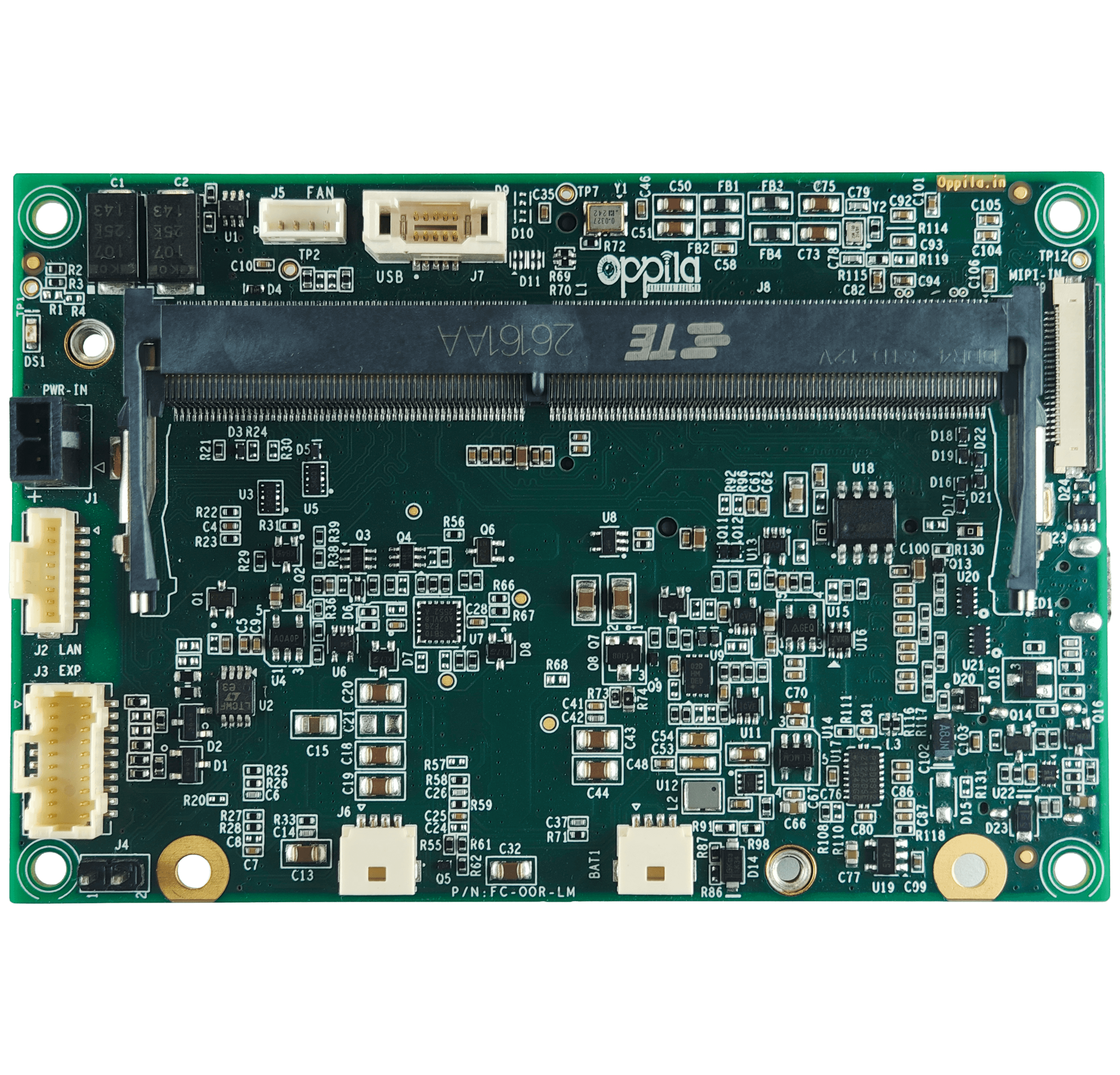
- Compatible with the NXP i.MX8M Plus Evaluation Kit
- I²C-to-UART bridge for VISCA control
- Optional RS-422 control interface for VISCA camera control
- 50 × 50 mm form factor & Temperature range: –20 °C to +85 °C
LVDS to MIPI CSI-2 Bridge Board
The LVDS - MIPI CSI-2 Bridge Board is a compact, high-performance camera interface bridge designed to convert LVDS video output from LVDS block cameras into a MIPI CSI-2 signal compatible with the NXP i.MX8M Plus 8MPLUSLPD4-EVK evaluation kit.
The board connects to the i.MX8M Plus MIPI CSI-2 port over a mini-SAS to mini-SAS cable, giving a shielded, latching interconnect that keeps high-speed differential pairs clean.
Built on a low-latency architecture, the bridge board enables real-time Full HD (1080p60) video streaming while maintaining precise synchronization and signal integrity.
The FCB cameras are controlled via a 3.3 V CMOS-level VISCA interface, connected to the i.MX8M Plus processor through an on-board I²C-to-UART bridge. An optional RS-422 control path is also available for VISCA camera control where a differential, longer-reach link to the camera is preferred. This configuration enables comprehensive camera control — including zoom, focus, exposure, and other VISCA-supported functions — to be executed directly from the host platform through the same MIPI CSI-2 interface connector. As a result, no external serial bridges or additional control wiring are required.
Engineered for embedded vision and AI applications, the LVDS–MIPI CSI-2 Bridge Board features a 4-lane MIPI CSI-2 output, a 12 V regulated input with onboard power conditioning, and industrial-grade EMI-optimized design for reliable operation in demanding environments. The board’s ultra-compact 50 × 50 mm footprint and plug-and-play electrical interface make it an ideal solution for AI edge systems, robotics, machine vision, and defence imaging platforms where low-latency, high-fidelity video transfer and embedded control are essential.
Applications:
- AI Edge Computing and Vision Analytics
- Robotics and Autonomous Platforms
- Industrial & Machine Vision Systems
- Medical & Diagnostic Imaging Instruments
- UAV / ROV Vision Payloads
- Security and Surveillance Cameras
- Broadcast and Multimedia Streaming
- Research, Development & Prototyping
| Features | Description |
|---|---|
| Input Current | Approx. 0.5 A typical (1.5 A max with camera) |
| Camera Interface | 30-pin LVDS (Single mode) micro-coaxial interface (Sony FCB-EV9520L Pinout) |
| MIPI CSI-2 Output | 4-lane MIPI CSI-2 (Mini-SAS Connector) |
| Supported Video Format | Up to Full HD 1080p 60fps (camera-dependent) |
| Camera Control | • VISCA over UART (3.3 V CMOS) bridged to I²C (host), • Optional RS-422 control interface |
| Indicators | Power LED (Green) |
| Board Dimensions (L × W) | 50 mm × 50 mm |
| Weight | Approx. 15 g |
| Operating Temperature | –20 °C to +85 °C |
| Compliance | MIPI CSI-2 Specification, RoHS |
| Recommended Supply | 12 V / 1.5 A |
| Camera Compatibility (H/W pinout) | LVDS Block Cameras (Sony, Tamron, KT&C, Videology, Wonwoo and Skoopia) |
| Host Platforms | NXP i.MX8M Plus (8MPLUSLPD4-EVK evaluation kit) |
LVDS – MIPI CSI-2 for i.MX8M Plus Documentation
Everything you need to integrate and deploy the bridge board.
FAQs
Which cameras does the LVDS to MIPI CSI-2 Bridge Board support?
The bridge board supports any LVDS block camera compatible with the Sony FCB-EV9520L 30-pin KEL pinout — including Sony FCB-EV9520L / EV9500L, Tamron MP3010M-EV, Wonwoo, Videology, Skoopia and KT&C LVDS cameras.
Which host platforms does the bridge board work with?
The board outputs 4-lane MIPI CSI-2 and is validated on the NVIDIA Jetson Orin Nano Super Developer Kit, Jetson Orin NX, AVerMedia D133 carrier board, Waveshare Jetson Orin IO-Base carrier board, and Connect Tech Hadron carrier board.
How is the camera controlled — zoom, focus, exposure?
The board integrates an on-board I²C-to-UART bridge that converts host I²C commands into 3.3 V CMOS VISCA messages. Zoom, focus, exposure and all VISCA functions are driven from the Jetson over the same MIPI CSI-2 connector — no external serial wiring required.
What video resolution and latency does it deliver?
Up to Full HD 1080p at 60 fps (camera dependent) with low-latency uncompressed streaming over 4-lane MIPI CSI-2 — suitable for real-time AI inference, robotics and industrial vision.
What are the board dimensions and operating temperature?
The board is 50 × 50 mm, weighs ~12.5 g and operates from -25 °C to +85 °C. Input is 12 V DC regulated (~0.5 A typical, 1.5 A max with camera).