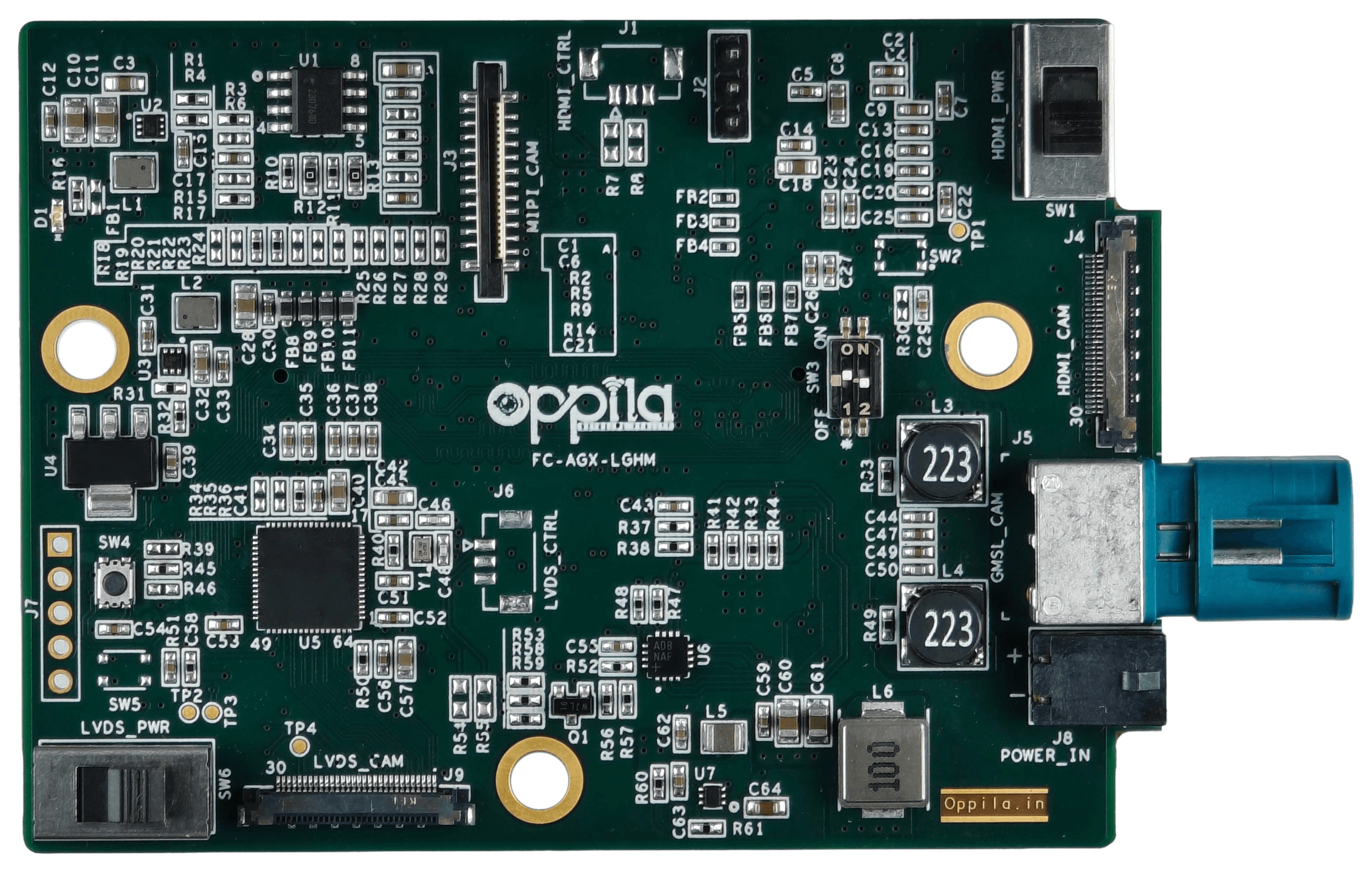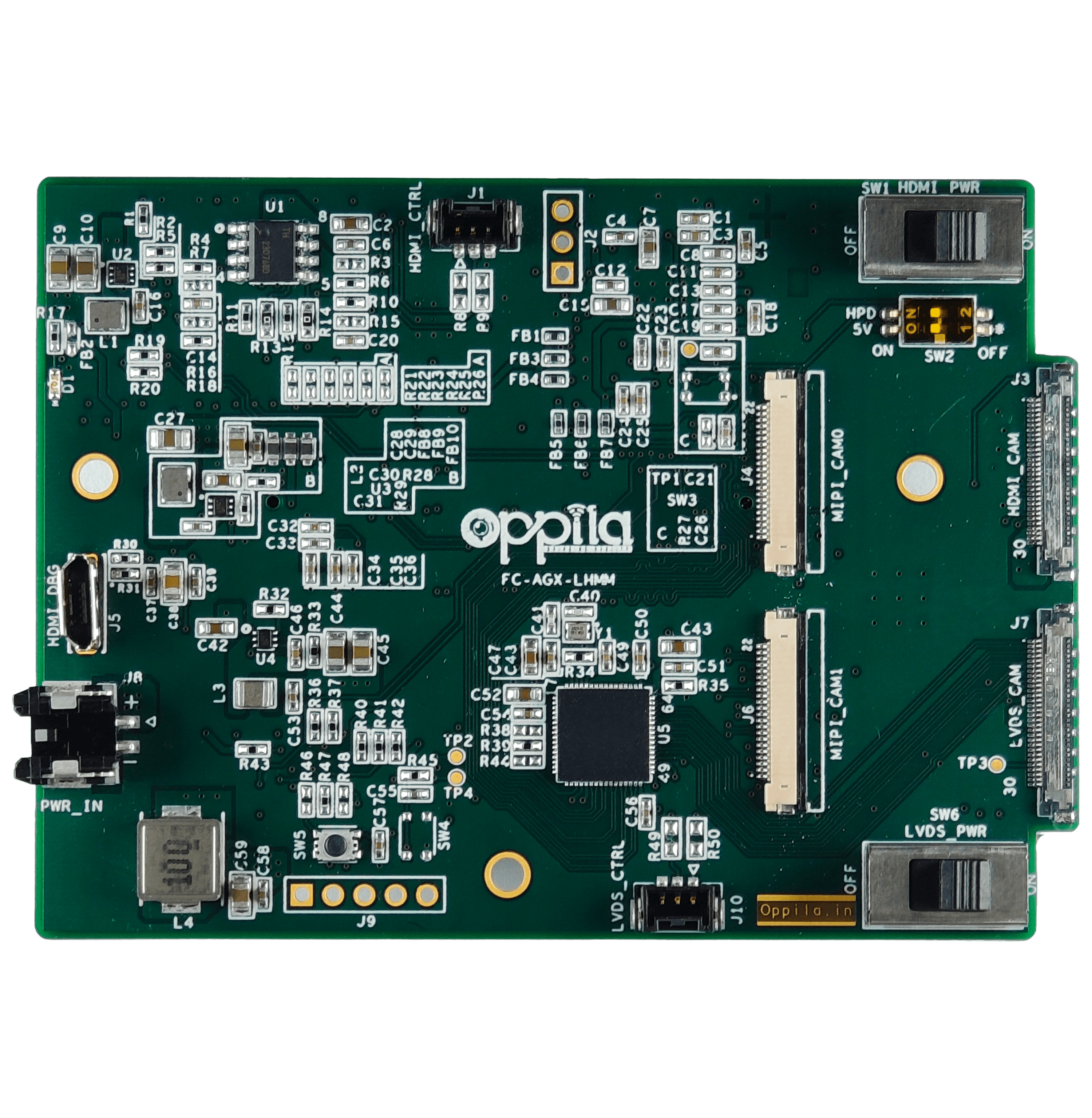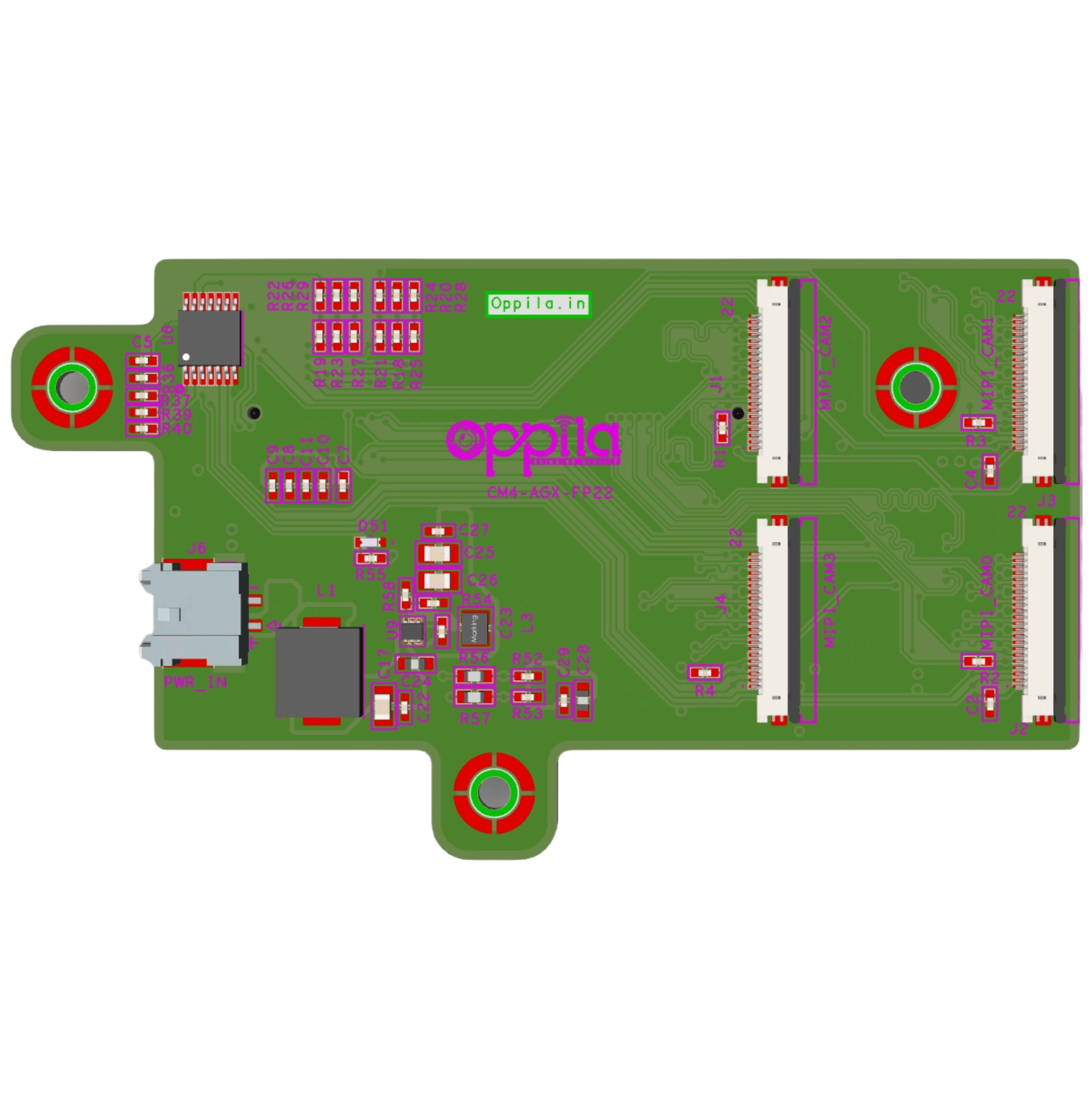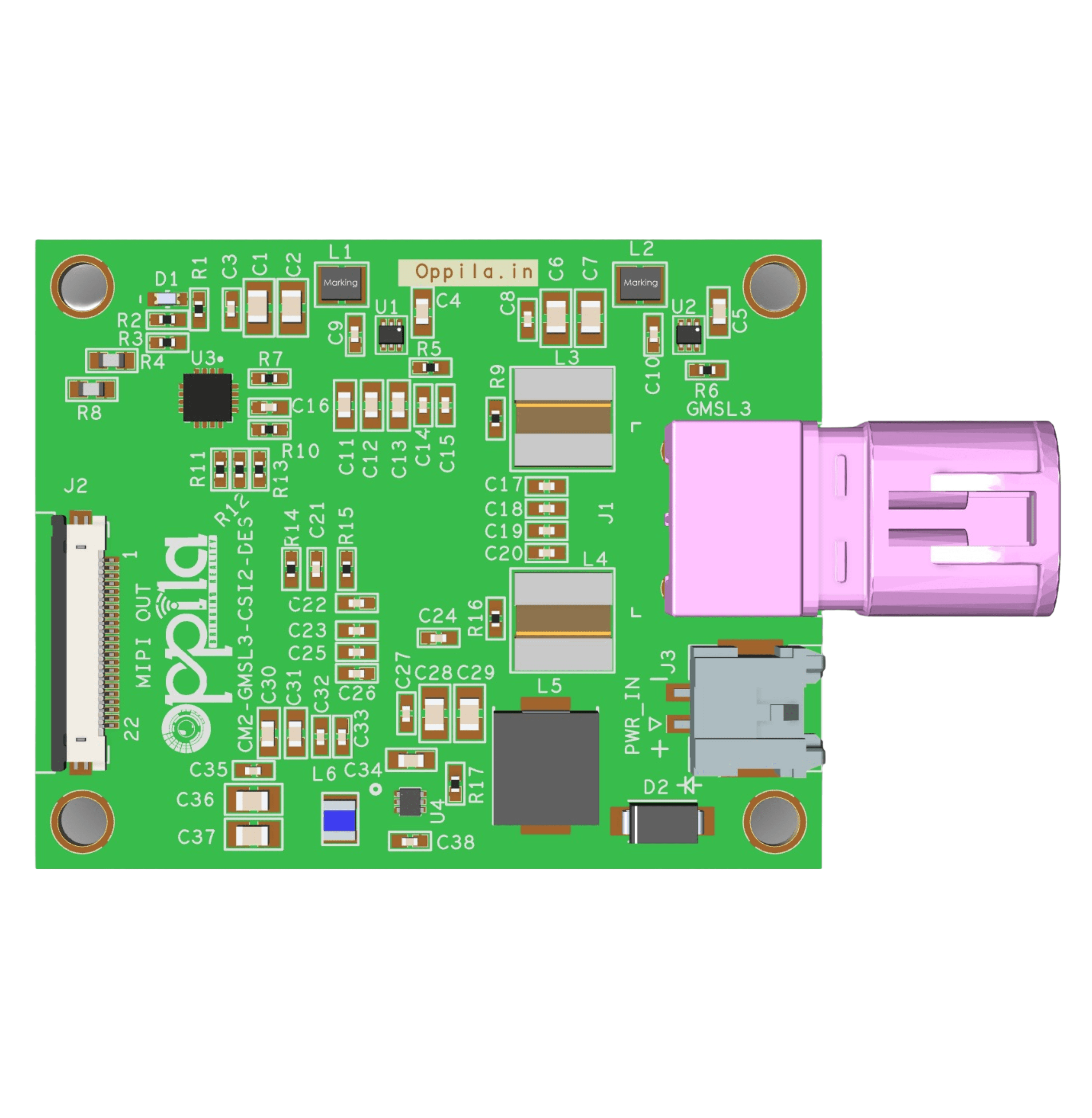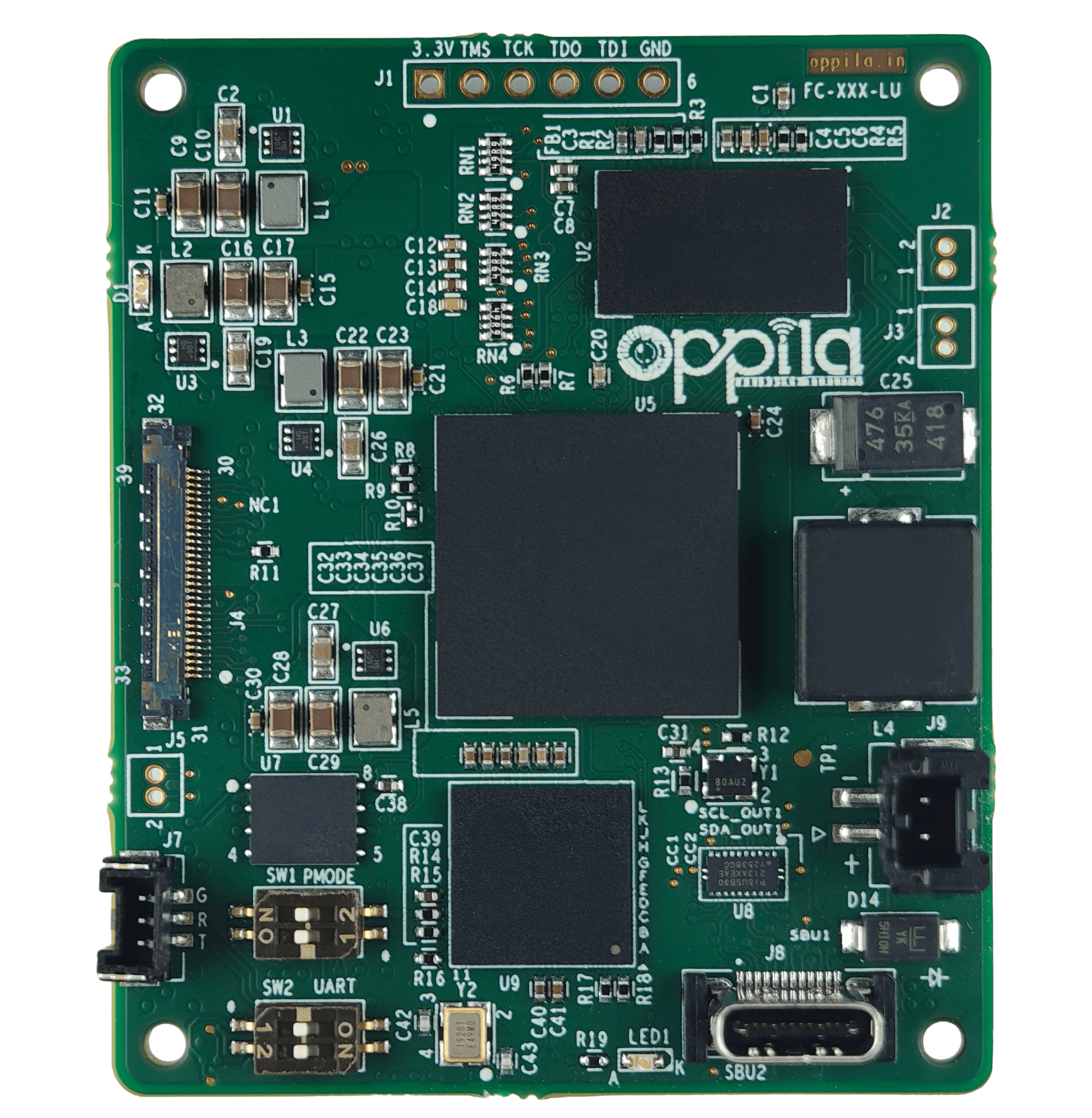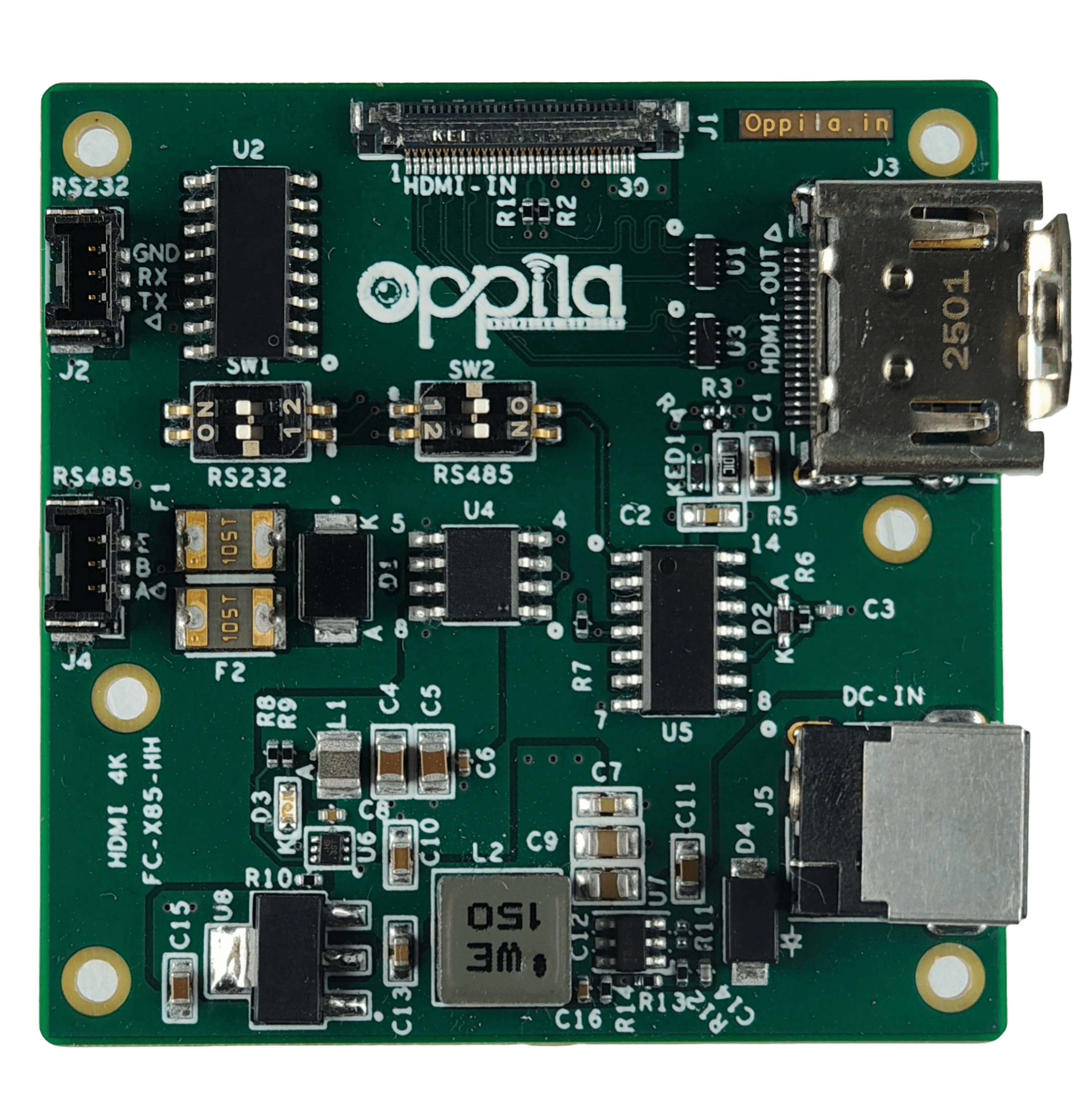
LVDS to GMSL3 Serializer Board
Converts LVDS camera video output to GMSL3
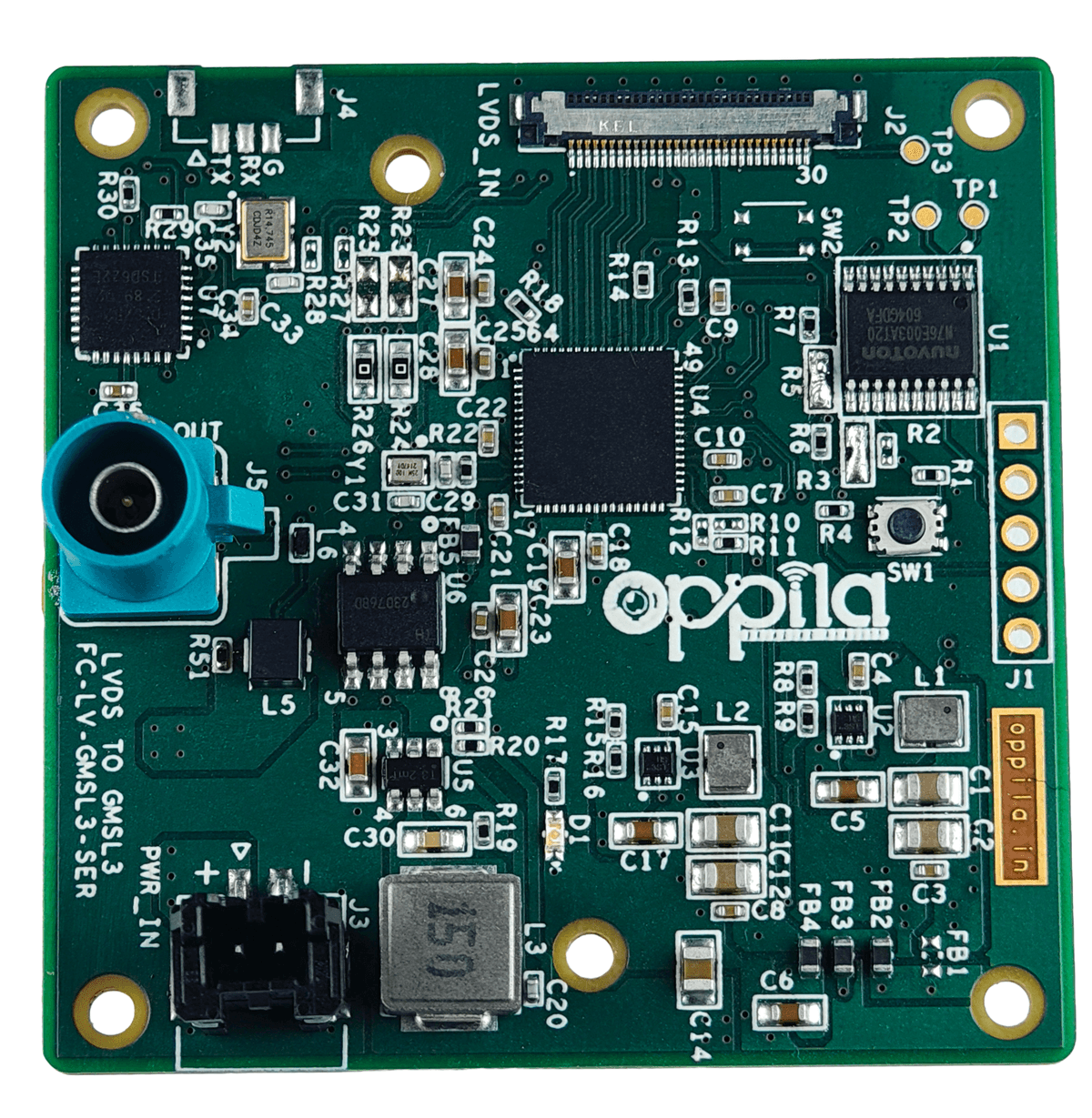
LVDS to GMSL3 Serializer Board
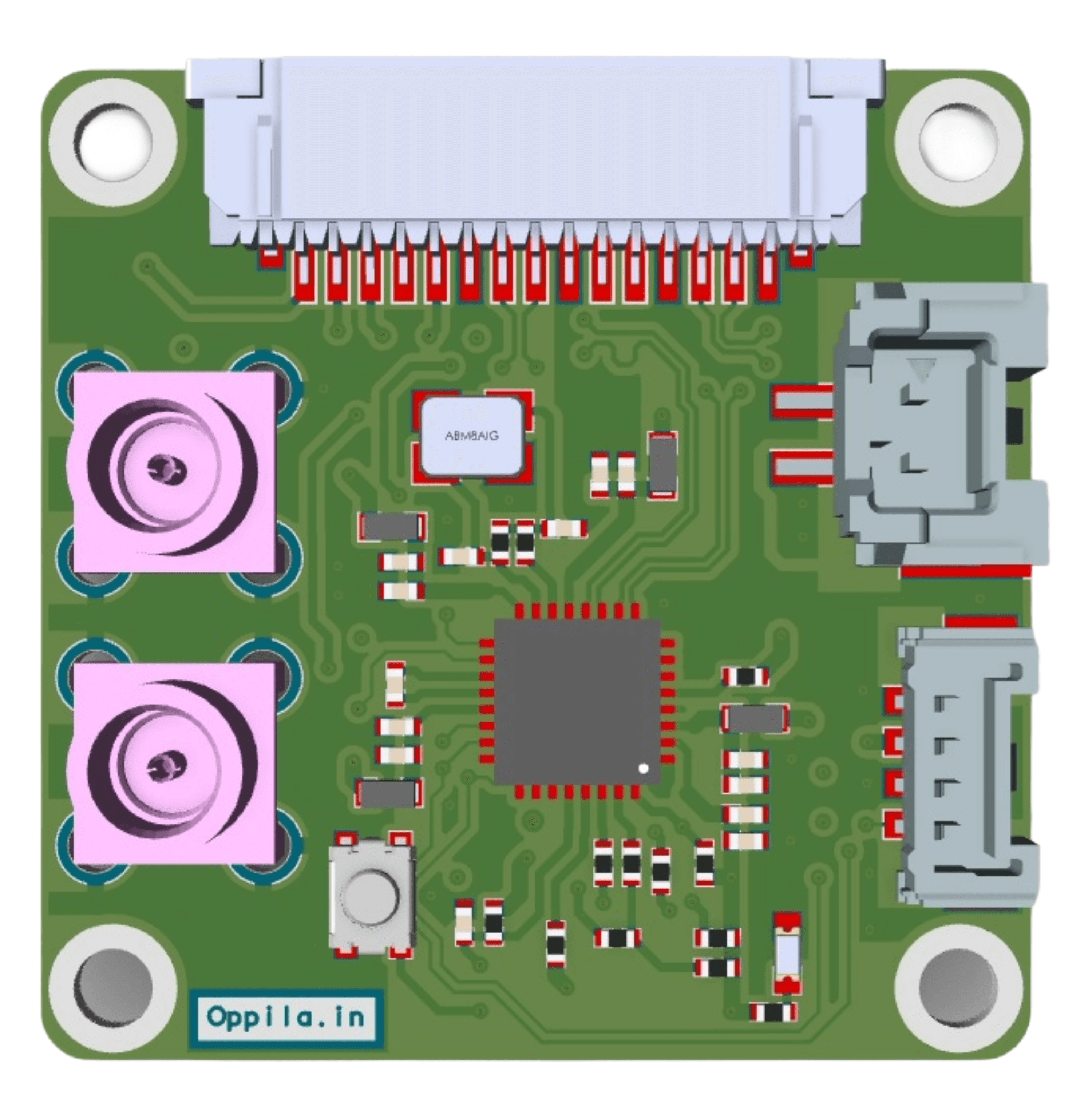
The LVDS-to-GMSL3 Serializer Board is a compact camera interface solution designed to integrate LVDS cameras into GMSL3-based video systems.
- Compatible pinouts with Sony, Tamron, KT&C, Videology, Wonwoo, Skoopia LVDS cameras.
- Converts LVDS camera video output to GMSL3
- 12Gbps GMSL3 forward link, backward compatible with 6Gbps/3Gbps GMSL2
- Compatible with NVIDIA Jetson Orin Nano Developer Kit through compatible GMSL3 deserializer boards.
- Camera control through the GMSL3 bidirectional control channel or external TTL UART interface
- 50 × 50 mm form factor & Temperature range: –20 °C to +85 °C
LVDS to GMSL3 Serializer Board
The LVDS-to-GMSL3 Serializer Board is a compact camera interface solution designed to integrate LVDS cameras into GMSL3-based video systems. The board receives the camera's LVDS video output, converts it to a high-speed GMSL3 serial stream, and transmits the video over a single 50 Ω coaxial cable to a compatible GMSL3 deserializer.
The board supports compatible LVDS cameras from manufacturers including Sony, Tamron, KT&C, Videology, Wonwoo, and Skoopia, providing a flexible interface solution for a wide range of existing LVDS camera platforms.
The camera can be controlled using either the GMSL3 control path or the external UART interface. These interfaces are intended as alternative control methods and should not be operated simultaneously. With its combination of LVDS camera compatibility, high-speed GMSL3 video transport, and flexible camera-control options, the board enables existing LVDS cameras to be integrated into modern GMSL3-based embedded vision, industrial imaging, robotics, and remote-camera systems.
Built for demanding environments, the board runs on a wide-range 12–24V DC input, with reverse-voltage and transient-voltage protection guarding against field power faults, and power-status LEDs for at-a-glance diagnostics. Its compact 50 mm × 50 footprint and 38.4g weight suit space-constrained embedded enclosures, while a –20°C to +85°C operating range and RoHS compliance support deployment across industrial, defense, and outdoor vision systems.
Ideal for: Embedded vision, industrial machine vision, robotics, surveillance, UAV and transportation imaging applications requiring high-speed transmission of Sony FCB LVDS camera video over GMSL3, with remote camera control through the GMSL3 link or direct control through an external TTL UART interface.
Applications:
- AI Edge Computing and Multi-Sensor Vision Analytics
- UAV / ISR Multi-Camera Payloads
- Robotics and Autonomous Platforms
- Industrial & Machine Vision Systems
- Defense Surveillance and Reconnaissance Systems
- Medical & Diagnostic Imaging Instruments
- Security and Perimeter Surveillance Cameras
- Research, Development & Rapid Prototyping
- Security and Surveillance Cameras
- Broadcast and Multimedia Streaming
| Parameter | Details |
|---|---|
| Input Voltage | 12–24 V DC regulated, wide-input (Molex Micro Lock + 2-pin connector) |
| Camera Interface | Accepts LVDS video signals from compatible camera systems |
| GMSL3/2 Output | Rosenberger FAKRA – Z Coded connector compatible |
| Supported Video Format | Up to Full HD 1080p 60 fps (camera dependent) |
| Camera Control | VISCA camera-control communication over the bidirectional GMSL3 link or external TTL-level UART interface for direct camera control |
| Indicators | Power LED (Green) |
| Board Dimensions (L × W) | 50 × 50 mm |
| Weight | 38.4 g |
| Operating Temperature | −20 °C to +85 °C |
| Compliance | RoHS compliant |
| Recommended Supply | 12 V / 2 A regulated (wide-input 12–24 V tolerant) |
LVDS to GMSL3 Serializer Board Documentation
Product manuals for this board are coming soon.
- Connector PinoutsPower, LVDS camera and GMSL3 connector pin descriptions.Coming soon
- Mechanical DimensionsPCB dimensions, weight and mounting holes.Coming soon
- Software & DriversHost setup, deserializer configuration, driver installation and video streaming.Coming soon
- Troubleshooting GuideResolving common camera, link and video issues.Coming soon
- Release NotesSoftware driver version history and update changelogs.Coming soon
Kernel Drivers
Driver packages for this board are coming soon.
- NVIDIA Jetson Orin NanoKernel driver package for use through a compatible GMSL3 deserializer board.Coming soon
FAQs
What does the LVDS to GMSL3 Serializer Board do?
It receives the camera's LVDS video output, converts it to a high-speed GMSL3 serial stream, and transmits the video over a single 50 Ω coaxial cable to a compatible GMSL3 deserializer.
Which cameras are supported?
The board supports compatible LVDS cameras from Sony, Tamron, KT&C, Videology, Wonwoo and Skoopia. Validated cameras are Sony FCB-EV9520L / FCB-EV9500L, Tamron MP3010M-EV, KT&C ATC-HZ5540T-LP and Videology 24Z2.1W-10XLVDS-462, at up to Full HD 1080p 60 fps (camera dependent).
Which host platforms can I use it with?
The board works with the NVIDIA Jetson Orin Nano Developer Kit through compatible GMSL3 deserializer boards.
Is it compatible with GMSL2 deserializers?
Yes. The board has a 12 Gbps GMSL3 forward link and is backward compatible with 6 Gbps / 3 Gbps GMSL2.
How is the camera controlled?
VISCA camera control runs either over the bidirectional GMSL3 link or through the external 3.3 V CMOS TTL UART interface for direct camera control. These are alternative control methods and should not be operated simultaneously.
What connector is used for the GMSL3 output?
A straight-mount Rosenberger connector, compatible with a FAKRA Z-coded plug. Video and control data travel over a single coaxial link.
What power supply does the board need?
The board accepts a wide-range 12–24 V DC regulated input through a Molex Micro Lock + 2-pin connector, with reverse-voltage and transient-voltage protection. A 12 V / 2 A regulated supply is recommended.
When will documentation and drivers be available?
Product manuals and driver packages for this board are coming soon. In the meantime, contact technical support at support@oppila.in for integration help.