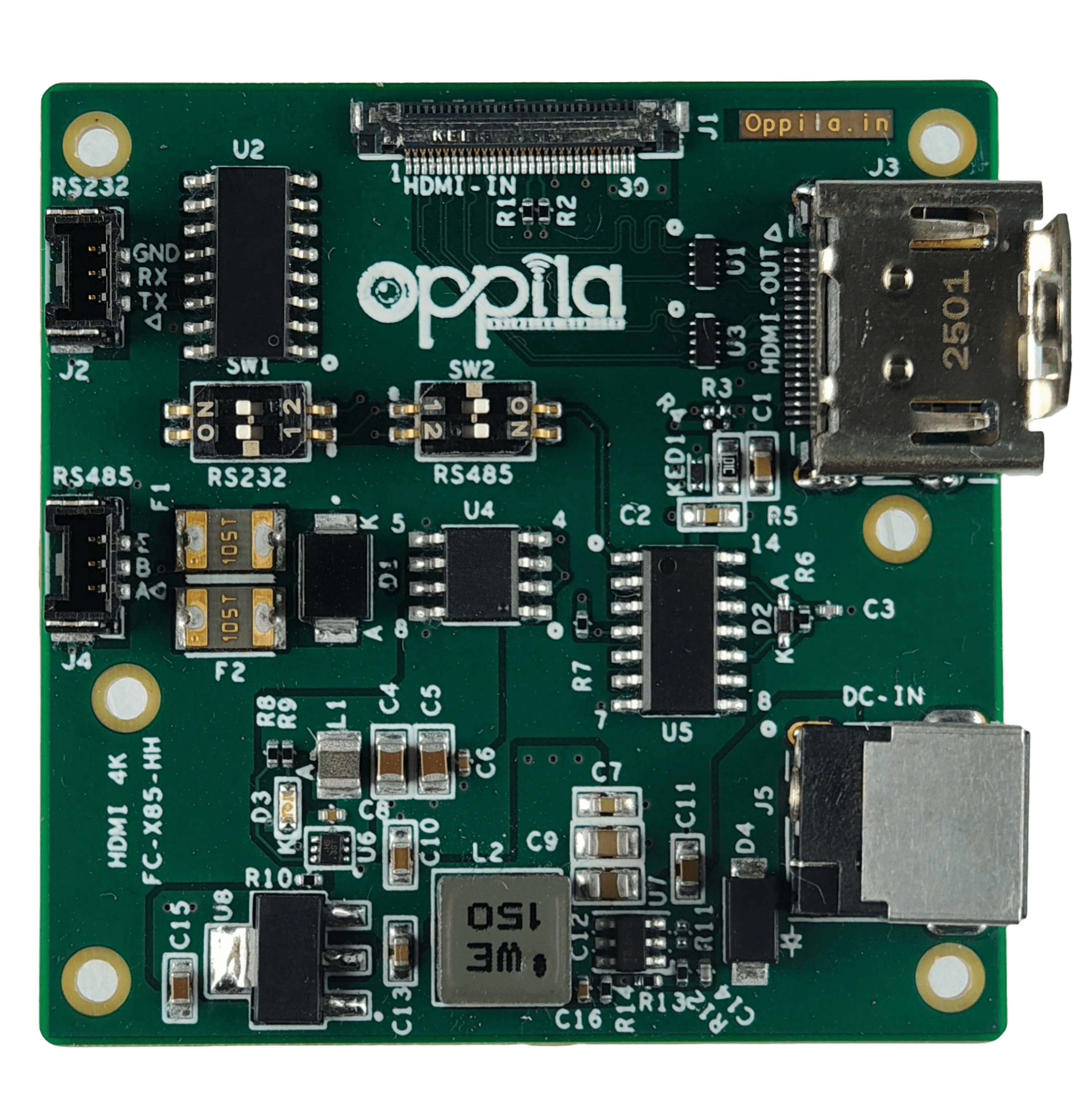
Jetson Orin Carrier Board
High-performance carrier board designed for AI edge computing
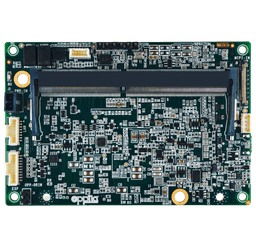
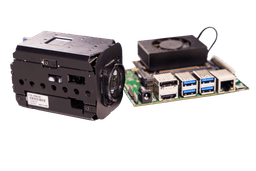

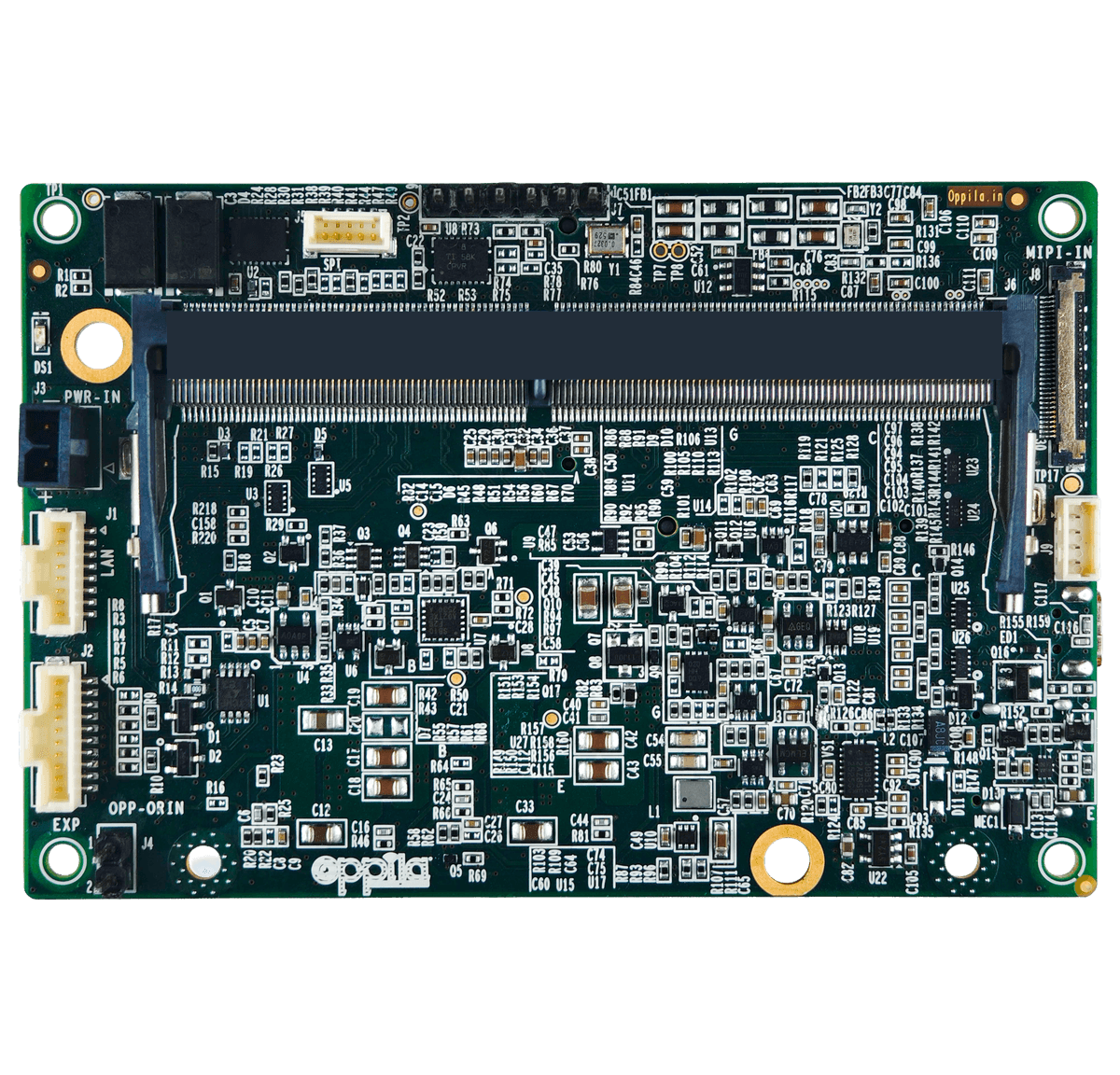
AstrOptix Orin Carrier Board
High-performance carrier board compatible with Jetson Orin Nano & Orin NX
- Supports 1 × LVDS (Sony FCB, Tamron or KT&C), 1 × MIPI CSI-2 (Sony FCB).
- Supports 1 × HDMI (Sony FCB) via optional bridge module.
- Supports Super mode
- 1 Gbps Ethernet
- M.2 Key E expansion for Wi-Fi/Bluetooth modules
- M.2 Key M expansion for NVMe SSD storage
AstrOptix Orin Carrier Board
The AstrOptix Orin Nano & Orin NX Carrier Board is a high-performance embedded vision and compute platform engineered around NVIDIA's Jetson Orin Nano and Orin NX modules. The platform fully unlocks the capabilities of both modules including Super Mode to deliver maximum AI throughput for demanding real-time applications.
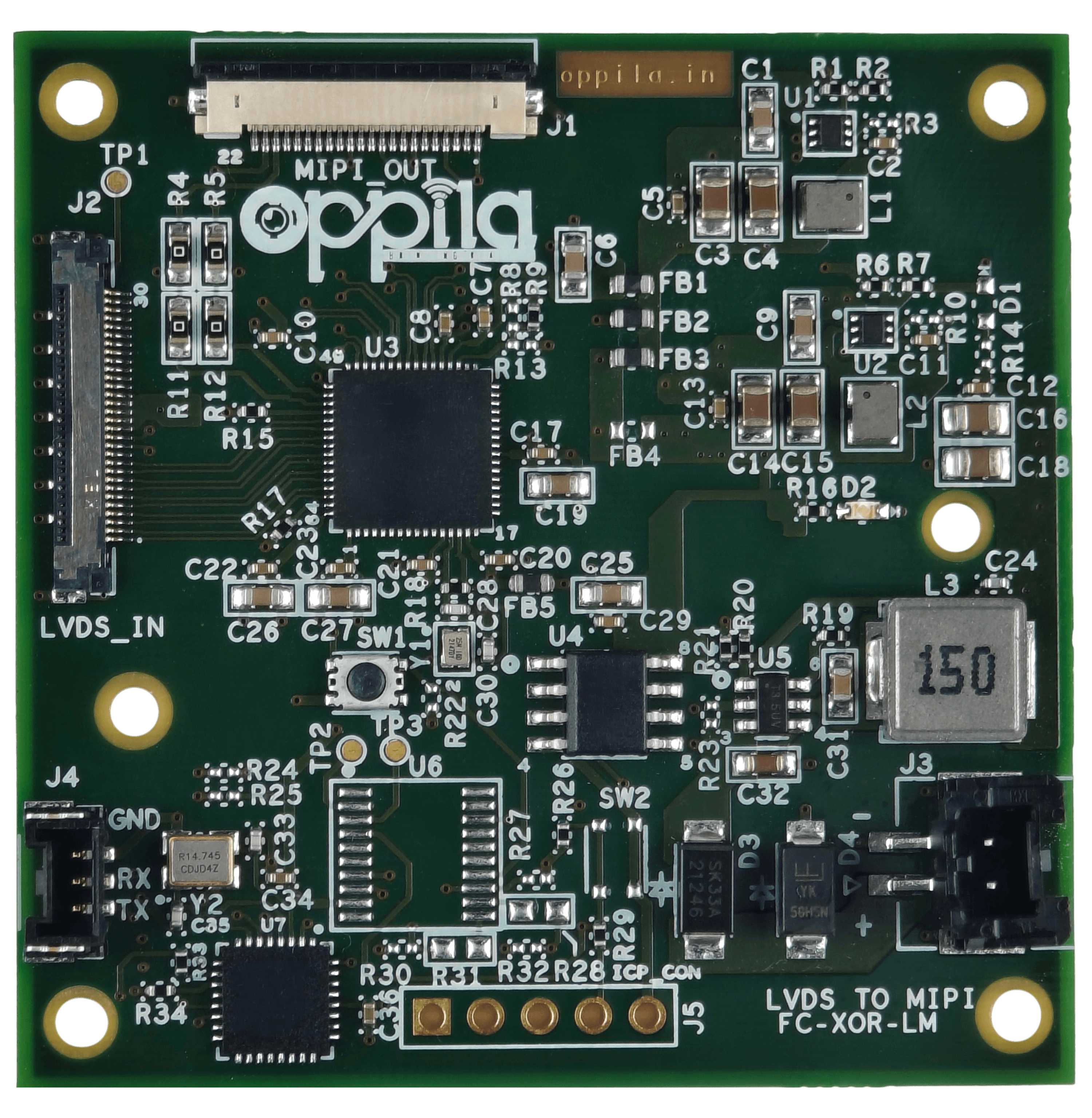
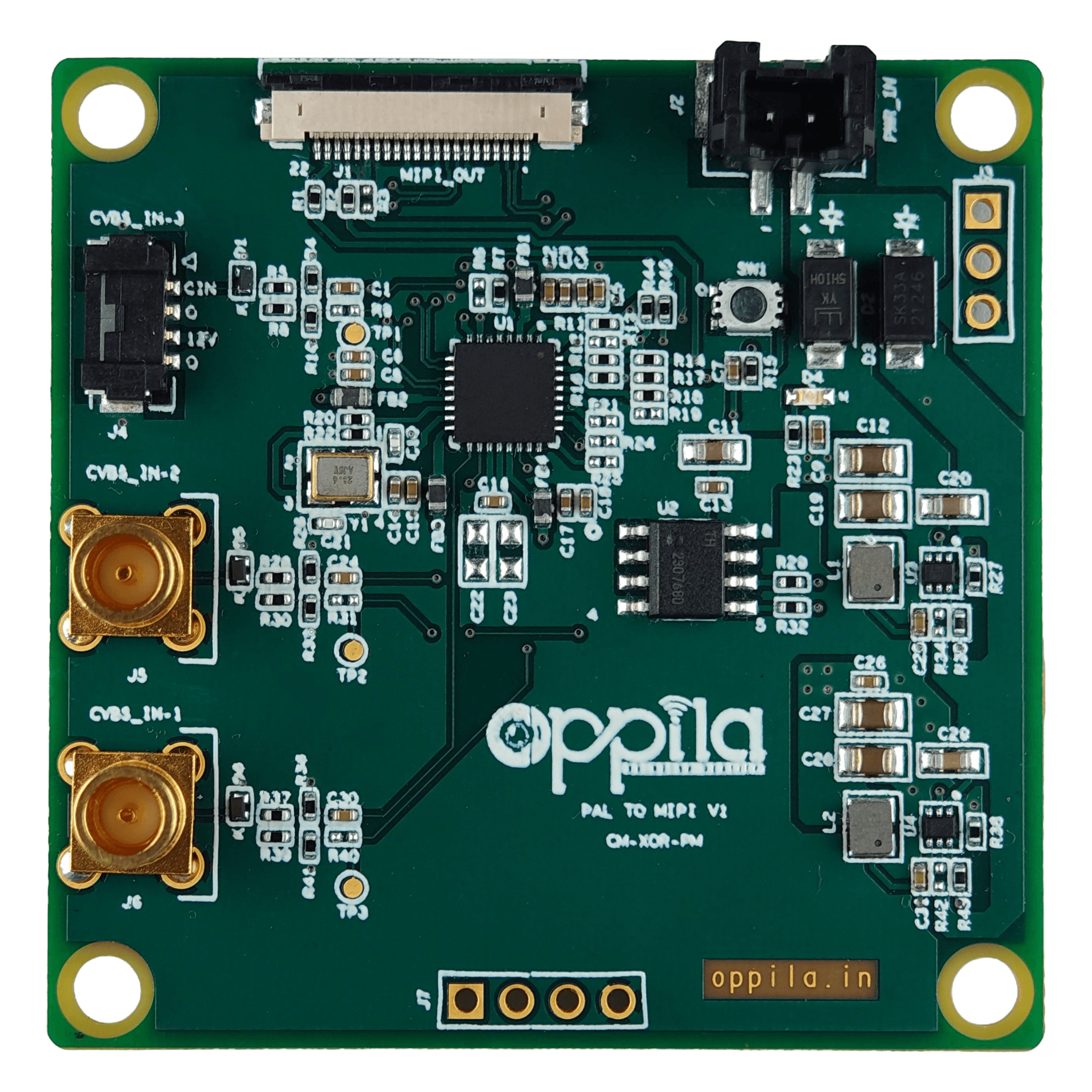
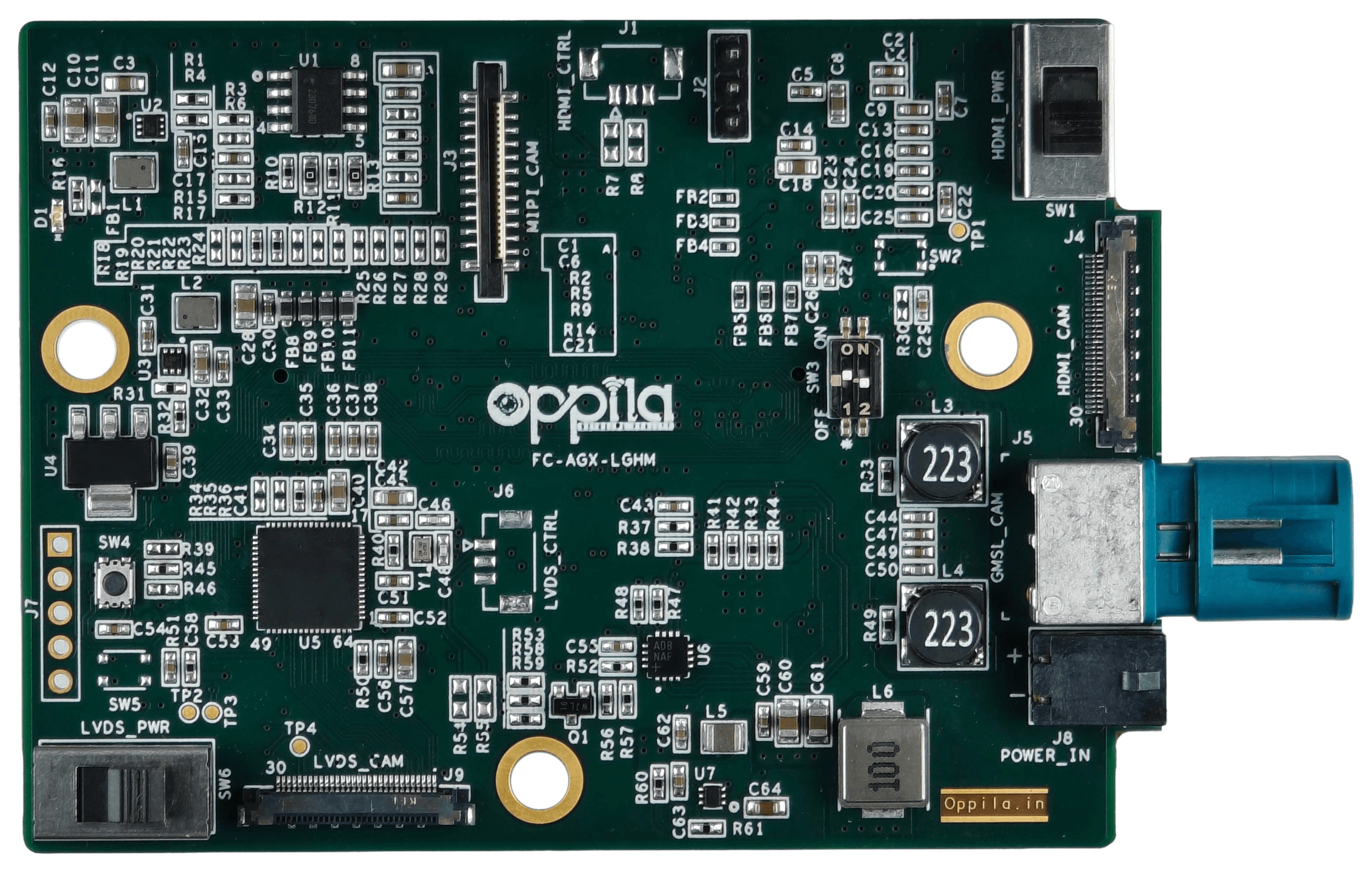
Designed for seamless integration, the board natively supports LVDS cameras from Sony (FCB-EV9520L, FCB-EV9500L), Tamron (MP3010M-EV), and KT&C (ATC-HZ5540T-LP). It also supports Sony’s FCB-EV9500M MIPI camera via a secondary 4-lane MIPI interface over a 30-pin Kel connector. Additionally, support for 4K HDMI cameras including the Sony FCB-ER8530 and FCB-EW9500H is available through optional bridge modules, enabling broad compatibility across diverse camera ecosystems and deployment scenarios.
The platform combines powerful AI inference, real-time video encoding, and flexible I/O interfacing in a compact, deployment-ready form factor. It is purpose-built for UAVs, defence imaging systems, robotics platforms, and edge AI vision applications where performance, reliability, and integration flexibility are mission critical.
The board supports a 1 Gbps Ethernet stream through a compact Molex Pico clasp 1.0 mm connector, enabling efficient network-based video transmission and remote AI-assisted analytics. A micro-HDMI output allows convenient local monitoring when required. For expansion, the board includes both M.2 Key E and M.2 Key M slots, supporting Wi-Fi/Bluetooth modules and NVMe SSDs to provide high-speed wireless connectivity and onboard storage. Additional interfaces such as UART TTL/RS422, I²C, CAN, SPI, and GPIO offer extensive system-level control and customization options.
Dual UART channels with 3.3 V CMOS levels allow simultaneous VISCA protocol control of multiple Sony FCB cameras. A CR1216 RTC battery holder is included to maintain accurate timestamping in embedded or remote applications. Power input is provided through a Molex Micro fit plus connector, supported by onboard regulation and LED indicators for power status.
Featuring a compact 90 × 60 mm footprint, industrial-grade construction, and an operating temperature range of –40 °C to +85°C, AstrOptix Carrier Board offers rugged reliability and top-tier performance for next-generation intelligent vision systems.
Typical Applications Include:
- AI Edge Computing and Vision Analytics
- Multi-Camera Networked Vision Systems
- Robotics and Autonomous Platforms
- Industrial & Machine Vision Systems
- Defense and Security Imaging
- UAV / ROV Payloads
- Smart Surveillance and Remote Monitoring
- Embedded Vision Research & Prototyping
| Feature | Description |
|---|---|
| CPU/GPU Module | NVIDIA Jetson Orin Nano & Orin NX |
| Storage | NVMe SSD via M.2 Key M 2242 |
| Camera Interfaces | 1 × LVDS (Sony FCB-EV series, KT&C, Tamron), 1 × MIPI CSI-2 four lanes (Sony FCB-EV9500M), optional HDMI (Sony FCB) via bridge board. |
| Power Switch | GPIO-controlled load switches for LVDS and MIPI camera power rails |
| Network Interface | 1 Gbps Ethernet via 1 mm Molex pico-clasp connector and M.2 Key E (Wi-Fi/BT) 2230 |
| Display Interface | Micro HDMI |
| USB Interface | USB Type-C for Flashing, Debugging & Data Transfer |
| SPI Interface | Yes, 4-pin 1 mm Molex pico-clasp connector |
| CAN Interface | Yes, 4-pin 1 mm Molex pico-clasp connector |
| UART Channels | 2 independent dedicated channels for camera VISCA control via KEL connector |
| Expansion Header | I²C, UART TTL/RS422 & GPIO via 10-pin 1 mm Molex pico-clasp connector |
| RTC | Onboard CR1216 battery holder |
| Power Input | 2-pin Molex Micro-fit plus connector, 12–19 V regulated |
| Fan | PWM-controlled onboard fan |
| Operating Temp | –40 °C to +85 °C |
| Dimensions (L × W) | 90 × 60 mm |
| Weight | 37.5 g |
| Compliance | RoHS |
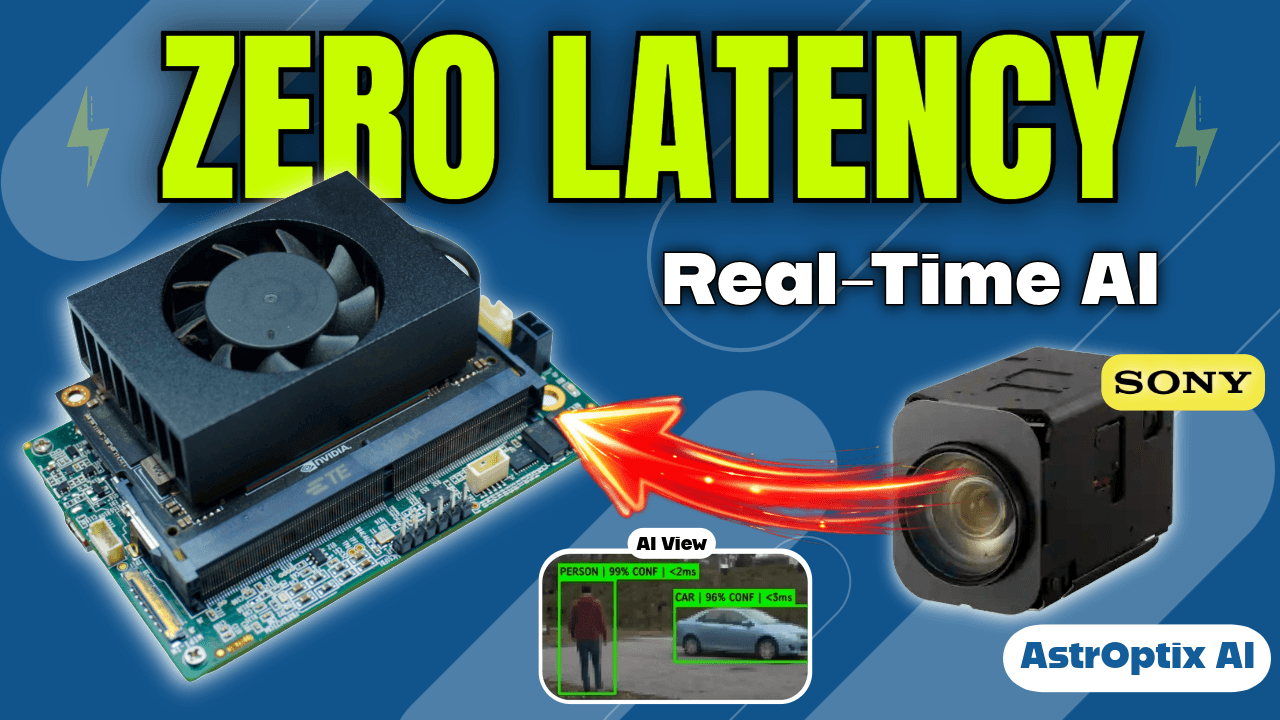
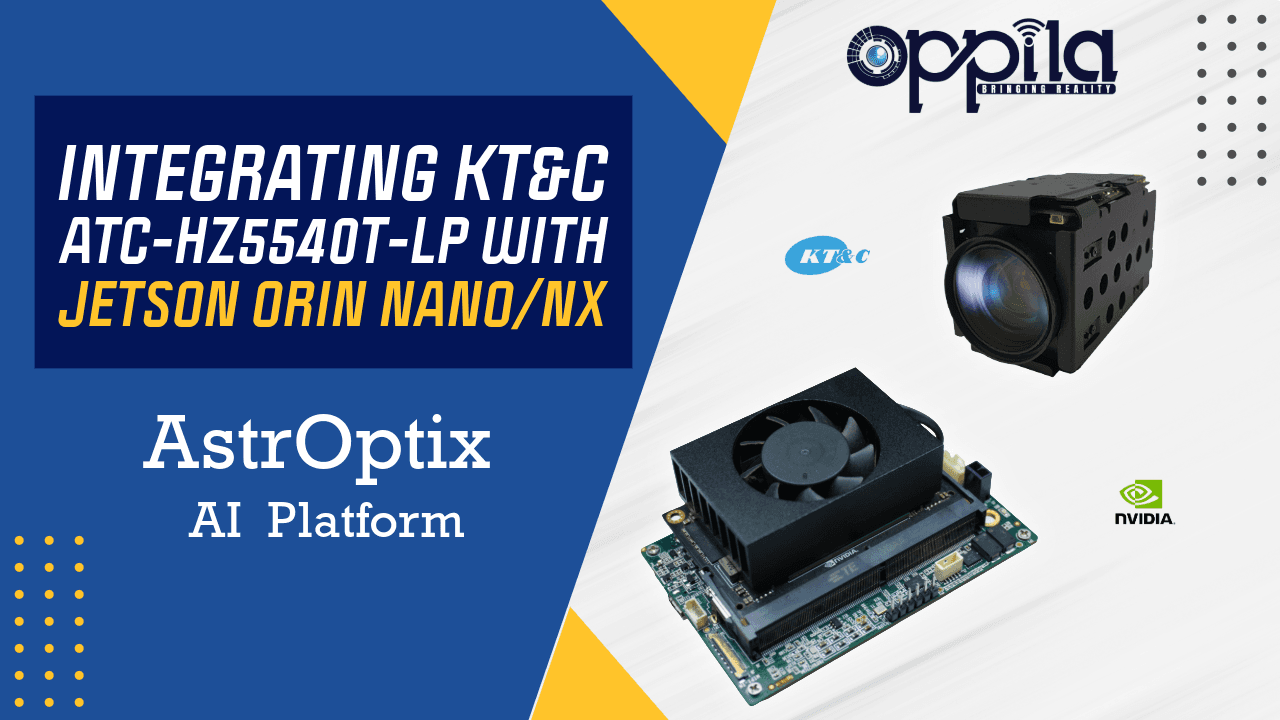
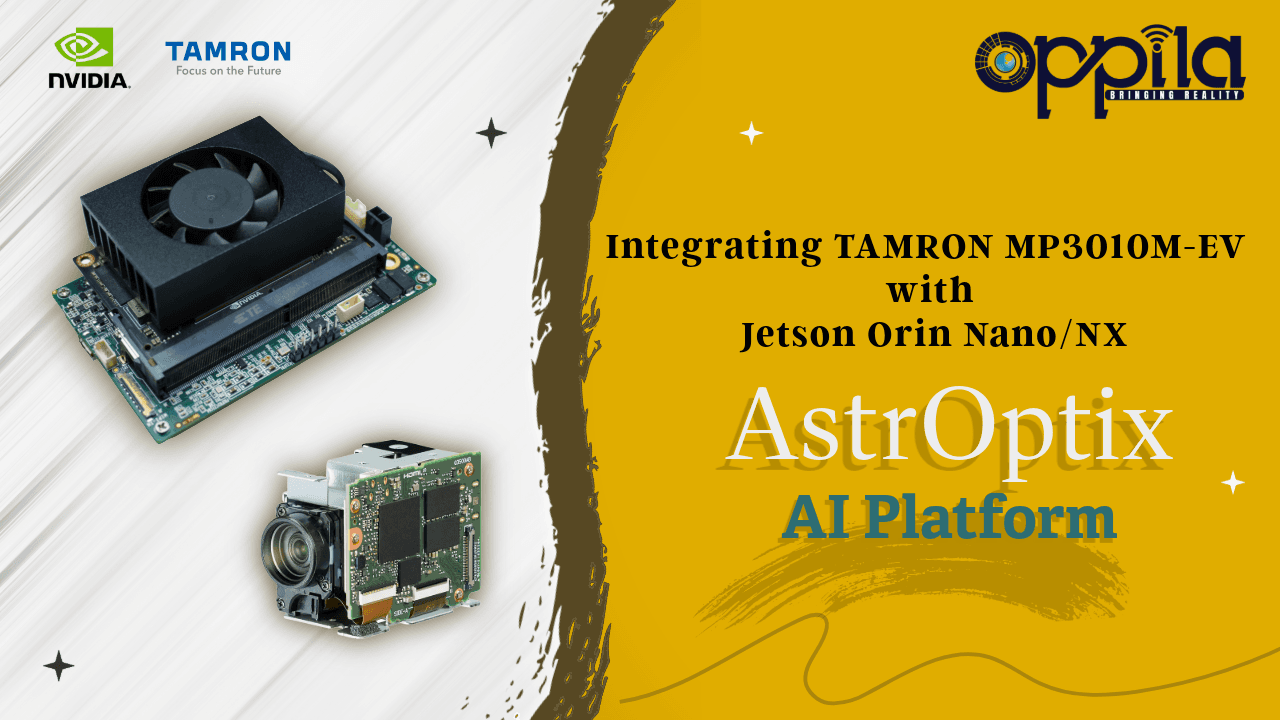
AstrOptix Orin Carrier Board Documentation
Everything you need to integrate and deploy the carrier board.

FAQs
Which NVIDIA Jetson modules does the AstrOptix Orin carrier board support?
The board supports NVIDIA Jetson Orin NX and Jetson Orin Nano modules, including Super Mode for maximum AI throughput.
What cameras are compatible with this carrier board?
The carrier board supports a wide range of LVDS block cameras — including Sony FCB-EV series, Tamron, KT&C, Wonwoo, Videology and Skoopia — via an onboard LVDS-to-MIPI CSI-2 converter and KEL connector. It also accepts direct MIPI CSI-2 cameras (including Sony FCB-EV9500M four-lane) through the onboard MIPI connector, and Sony FCB-ER8530 / FCB-ER9500 4K HDMI block cameras through an optional bridge module. Dual UART channels with VISCA protocol allow simultaneous control of multiple cameras.
What is the operating temperature range?
The board operates from –25 °C to +85 °C, making it suitable for harsh-environment deployments in defence, industrial, and outdoor applications.
What connectivity and expansion options are available?
The board provides 1 Gbps Ethernet (Molex pico-clasp), M.2 Key E 2230 for Wi-Fi/Bluetooth, M.2 Key M 2242 for NVMe SSD, Micro HDMI display output, USB Type-C for flashing and debugging, SPI, CAN, I²C, GPIO expansion header, and RS-422 for long-distance communication.
What are the typical applications for this carrier board?
Typical applications include AI edge computing and vision analytics, UAV/ROV payloads, defence and security imaging, robotics and autonomous platforms, industrial and machine vision systems, multi-camera networked vision systems, smart surveillance, and embedded vision research.
How does this compare to the NVIDIA Jetson Orin developer kit?
The Oppila carrier board is a compact (90 × 60 mm, 37.5 g), production-ready alternative with industrial-temperature support, built-in LVDS and MIPI CSI-2 interfaces for Sony FCB, Tamron, KT&C, Wonwoo, Videology and Skoopia block cameras, VISCA control, RS-422, CAN bus, and a form factor designed for deployment in drones, robotics, and edge AI systems. It is RoHS compliant.
What power input does the board require?
The board accepts 12–19 V regulated power via a 2-pin Molex Micro-fit plus connector. It includes onboard regulation, GPIO-controlled load switches for camera power rails, and LED indicators for system and power status.