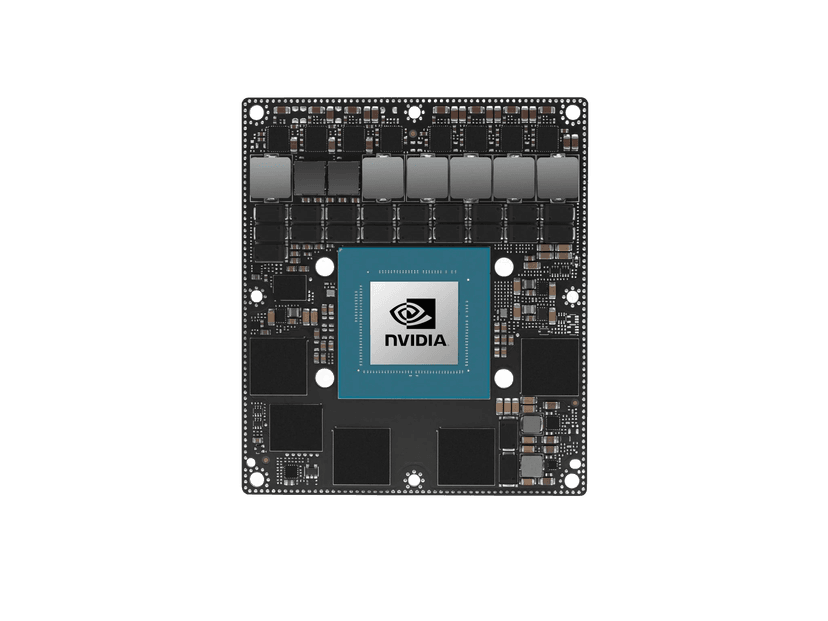
MIPI CSI-2 Driver - NVIDIA
High-Performance Camera Drivers for NVIDIA Jetson
NVIDIA Jetson Xavier Series – MIPI CSI-2 Camera Drivers
The Xavier family (AGX Xavier, Xavier NX) supports MIPI CSI-2 via a multi-lane D-PHY interface. On AGX Xavier, the module exposes a 16-lane MIPI CSI-2 interface. On Xavier NX, the module brings 14 MIPI CSI-2 lanes (commonly allocated as 3×4-lane or 6×2-lane camera configurations or equivalent mixes) depending on carrier board wiring. The MIPI driver relies on the Tegra194 (for Xavier) CSI controller stack with standard V4L2 asynchronous sub-devices, device-tree overlays, and an ISP pipeline for RAW capture, calibration data handling (EEPROM / lens shading / NVC), and tuning. Power sequencing, clocking, lane mapping, and virtual-channel assignment are configured via the carrier’s device-tree. Production images are typically built using standard JetPack releases, and flashing is done with nvme/nvflash (or SDK Manager) on both official and third-party carrier boards.
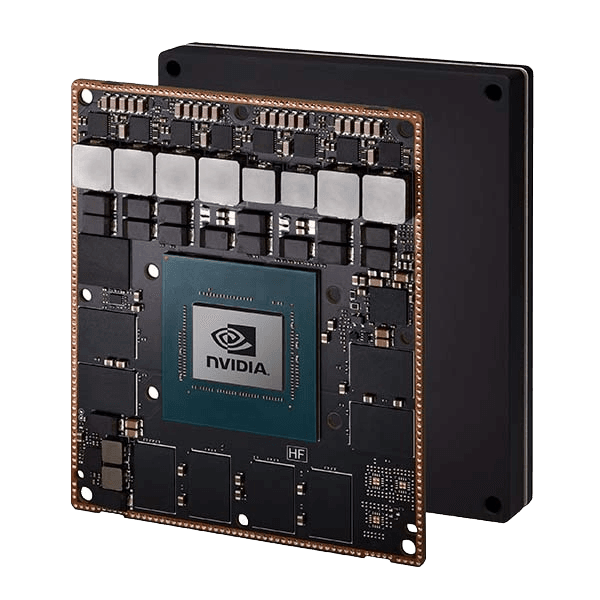
NVIDIA Jetson AGX Xavier
The NVIDIA Jetson AGX Xavier features a 16-lane MIPI CSI-2 interface for high-bandwidth camera integration. It uses the Tegra194 CSI controller and standard V4L2 drivers, supporting complex multi-camera setups with synchronized capture and advanced ISP processing.
- 16 MIPI CSI-2 Lanes
- High-performance AI/Vision
- Support for 6+ Cameras
- Dual Deep Learning Accelerator (DLA)
Jetson AGX Xavier is NVIDIA’s high-end embedded AI platform providing 16-lane MIPI CSI-2 connectivity (plus optional SLVS-EC input) for camera integration. Sensor drivers are standard V4L2 asynchronous sub-devices (e.g. under drivers/media/i2c/) and are registered via the tegra-camera-platform module. Device-tree definitions specify CSI port index, data-lane and clock-lane mapping, lane polarity, D-PHY link frequency/settle parameters, virtual channels (if used), and sensor power/reset controls. Runtime image-quality data — lens correction, calibration (EEPROM), color tuning — is loaded via calibration binaries and ISP tuning libraries (.so). The final pipeline delivers image data into GPU/NPU memory via zero-copy (where supported), enabling efficient computer vision or AI processing. Actual multi-camera performance (number of simultaneous sensors, resolution, frame-rate) depends on sensor bandwidth, carrier wiring, thermal/power constraints, and overall system load.
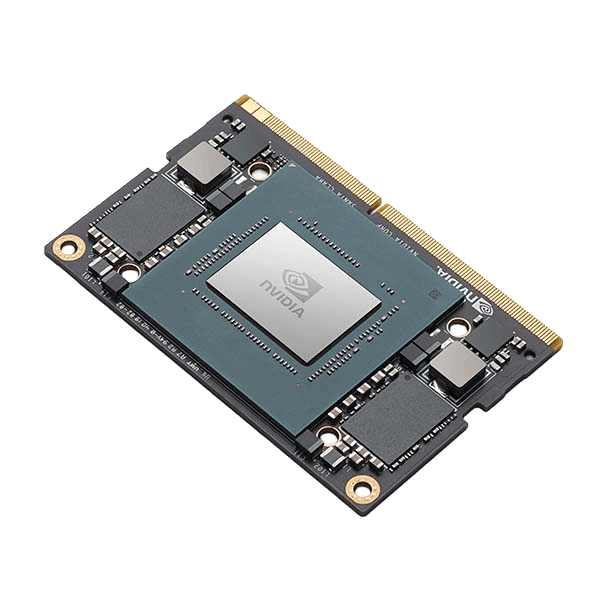
NVIDIA Jetson Xavier NX
The Jetson Xavier NX offers high-performance AI in a compact SO-DIMM form factor with 14 MIPI CSI-2 lanes. It shares the same software stack as the AGX Xavier, allowing seamless driver reuse for cost-effective, scalable embedded vision applications.
- 14 MIPI CSI-2 Lanes
- Small Form Factor (SO-DIMM)
- Up to 21 TOPS AI Performance
- Supports 3x4 or 6x2 Camera Configs
Jetson Xavier NX (8 GB / 16 GB module) uses the same Tegra194 CSI controller and software stack as AGX Xavier, but exposes a 14-lane MIPI CSI-2 interface via its SO-DIMM module connector. Depending on carrier board layout, typical supported camera configurations include 3×4-lane or combinations like 2×4-lane + 3×2-lane, or 6×2-lane cameras. Sensor drivers, calibration handling, power sequencing, and ISP tuning pipelines are identical to AGX Xavier, enabling seamless driver compatibility and reuse. Because lane count is lower than AGX Xavier’s, simultaneous high-bandwidth multi-camera configurations (e.g. many 4-lane 4K sensors) are more constrained. Actual achievable camera setups depend on carrier wiring, sensor lane allocation, and overall system bandwidth/thermal headroom. JetPack-based builds and standard flashing workflows apply across both Xavier variants and third-party carrier boards.