KT&C ATC-HZ5540T-LP with Jetson Orin Nano Super Developer Kit | LVDS to MIPI CSI-2 Integration (1080p60 AI Vision)
Introduction
Integrating LVDS-based industrial cameras with modern AI platforms like NVIDIA Jetson has traditionally required complex hardware and custom drivers.
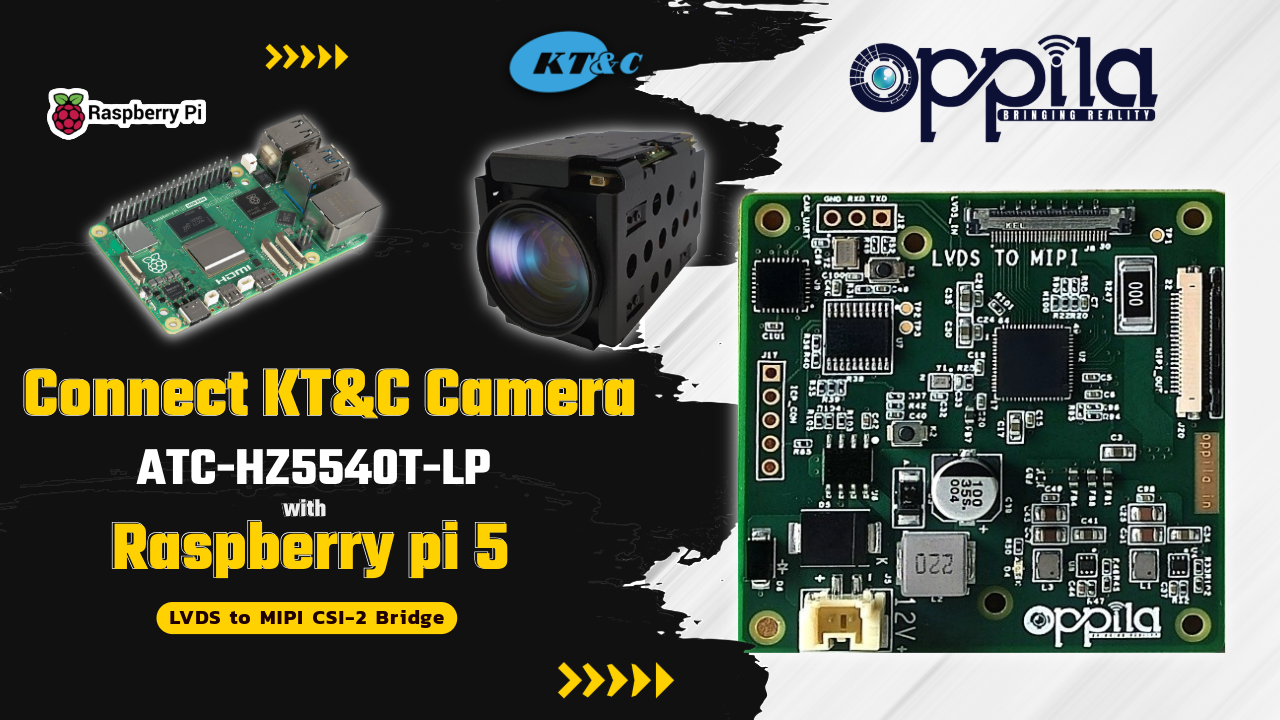
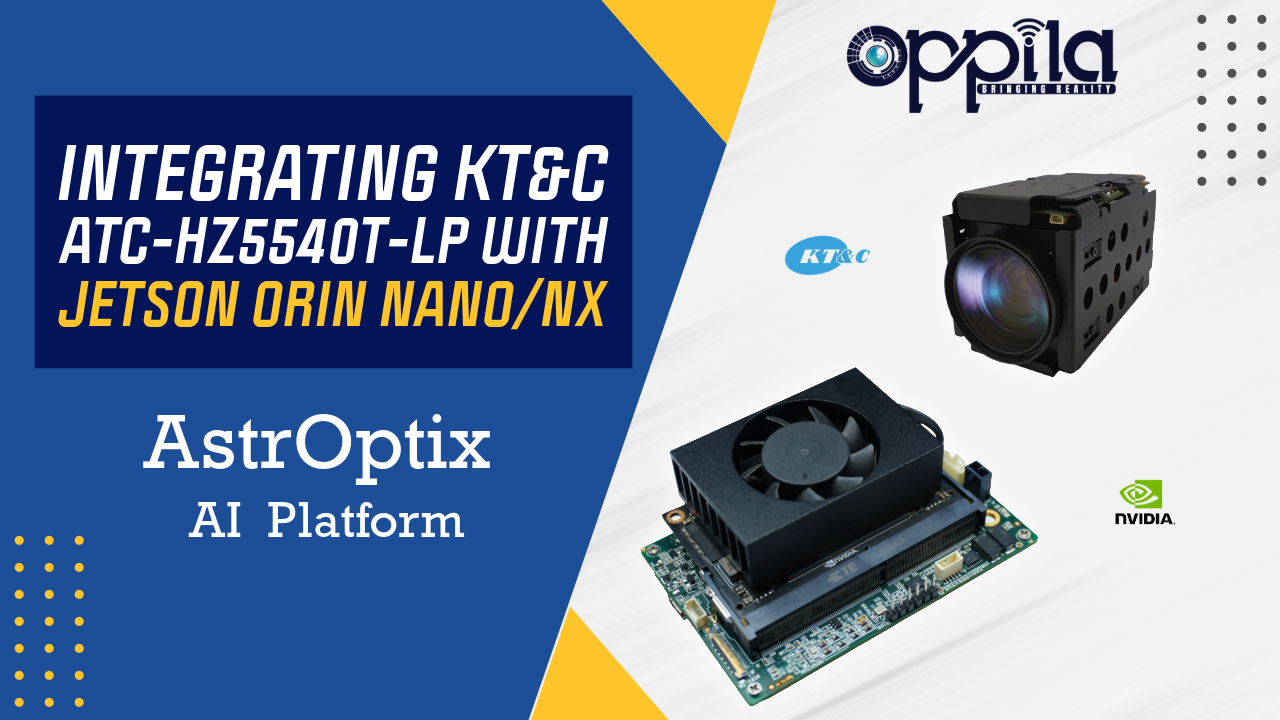
The Oppila LVDS to MIPI CSI-2 Bridge simplifies this by enabling direct integration of the KT&C ATC-HZ5540T-LP zoom block camera with Jetson Orin Nano/NX.
This solution delivers:
- Stable 1080p @ 60fps
- Ultra-low latency streaming
- AI-ready video pipeline
Perfect for robotics, surveillance, drones, and industrial automation.
YouTube Video
LVDS to MIPI CSI-2 Conversion
The bridge converts the camera's LVDS output into a MIPI CSI-2 stream fully compatible with Jetson platforms.
Key Features
- 4-lane MIPI CSI-2 output
- Error correction (ECC + CRC)
- High-speed & low-power signaling
- Fixed 1080p60 output
- Zero-frame-drop pipeline
KT&C ATC-HZ5540T-LP Camera Overview
The KT&C ATC-HZ5540T-LP is a powerful zoom block camera designed for long-range and high-clarity imaging.
Core Specifications
- 1/2.9" Global Shutter CMOS
- 40× optical zoom + 12× digital zoom
- 1080p @ 60fps output
- Mechanical Day/Night
- True WDR, 3D DNR, Defog
- UART control (VISCA, Pelco-D, Pelco-C)
- Supports up to 256 preset positions
- Advanced exposure controls for consistent imaging
Why This Setup Works for AI Vision
Once connected through the bridge, the camera behaves like a native MIPI CSI-2 sensor.
This means:
- Works directly with V4L2 (/dev/video0)
- Compatible with DeepStream, OpenCV, TensorRT
- Enables real-time inference with minimal latency
Hardware Setup
Required Components
- NVIDIA Jetson Orin Nano/NX Super Dev Kit
- Oppila LVDS → MIPI CSI-2 Bridge
- KT&C ATC-HZ5540T-LP camera
Connections
- LVDS → Bridge
- Bridge → Jetson (CSI)
- UART → Camera control
Power
- Camera: 12V DC
- Bridge: 12V DC
Real-Time Streaming (GStreamer)
After driver setup, access video via: /dev/video0
Basic Pipeline
gst-launch-1.0 v4l2src device=/dev/video0 ! video/x-raw,format=UYVY,width=1920,height=1080,framerate=60/1 ! videoconvert ! autovideosink
Why It Works
- Smooth 1080p60 playback
- Low CPU usage
- Zero-copy pipeline
- No frame drops
Advanced Options
- GPU rendering → nvoverlaysink
- Encoding → nvv4l2h264enc
- Streaming → RTP / UDP
Camera Control via UART
The KT&C camera supports multiple control protocols.
Supported Protocols
- VISCA
- Pelco-D / Pelco-C
- Hitachi
Control Capabilities
- Zoom (40× optical control)
- Focus (auto/manual)
- Exposure & shutter
- WDR, DNR, Defog
- Preset positions (up to 256)
Applications
This solution is ideal for:
- Surveillance & long-range monitoring
- Drone/UAV imaging
- Industrial inspection
- Robotics & automation
- Smart city analytics
- Edge AI computing
Key Benefits
- Ultra-low latency
- Stable 1080p60 output
- High zoom capability (40× optical)
- Advanced image processing
- Plug-and-play with Jetson
Conclusion
The Oppila LVDS to MIPI CSI-2 Bridge transforms the KT&C ATC-HZ5540T-LP into a powerful AI vision camera for NVIDIA Jetson platforms. With high zoom capability, advanced imaging features, and seamless integration, this setup enables next-generation embedded vision applications across industries.
Product Details
Full specifications, kits, and datasheets: LVDS to MIPI CSI-2 Bridge
FAQs
The KT&C ATC-HZ5540T-LP is a 40× optical zoom block camera with 1080p60 output, designed for surveillance and industrial vision applications.
Yes, it can be connected using an LVDS to MIPI CSI-2 bridge, making it compatible with Jetson platforms.
It converts LVDS camera output into MIPI CSI-2 format, which is supported by Jetson devices.
The camera supports up to 1080p at 60 frames per second.
No, Jetson supports MIPI CSI-2. LVDS cameras require a bridge for compatibility.
It enables plug-and-play integration, low latency, and compatibility with AI frameworks.
The camera is available as a V4L2 device, typically /dev/video0.
A typical pipeline uses v4l2src with format UYVY at 1080p60 for streaming.
Yes, it works with NVIDIA DeepStream, TensorRT, and OpenCV.
VISCA, Pelco-D, Pelco-C, and Hitachi protocols are supported via UART.
Yes, full control including zoom, focus, and presets is available via UART.
It offers 40× optical zoom and 12× digital zoom.
Yes, due to low latency and high zoom, it is ideal for UAVs and robotics.
Surveillance, industrial inspection, AI vision systems, drones, and smart cities.
Yes, it includes features like WDR, DNR, and defog for improved low-light performance.