
MIPI CSI-2 Driver - Qualcomm
High-Performance Camera Drivers for Qualcomm Robotics
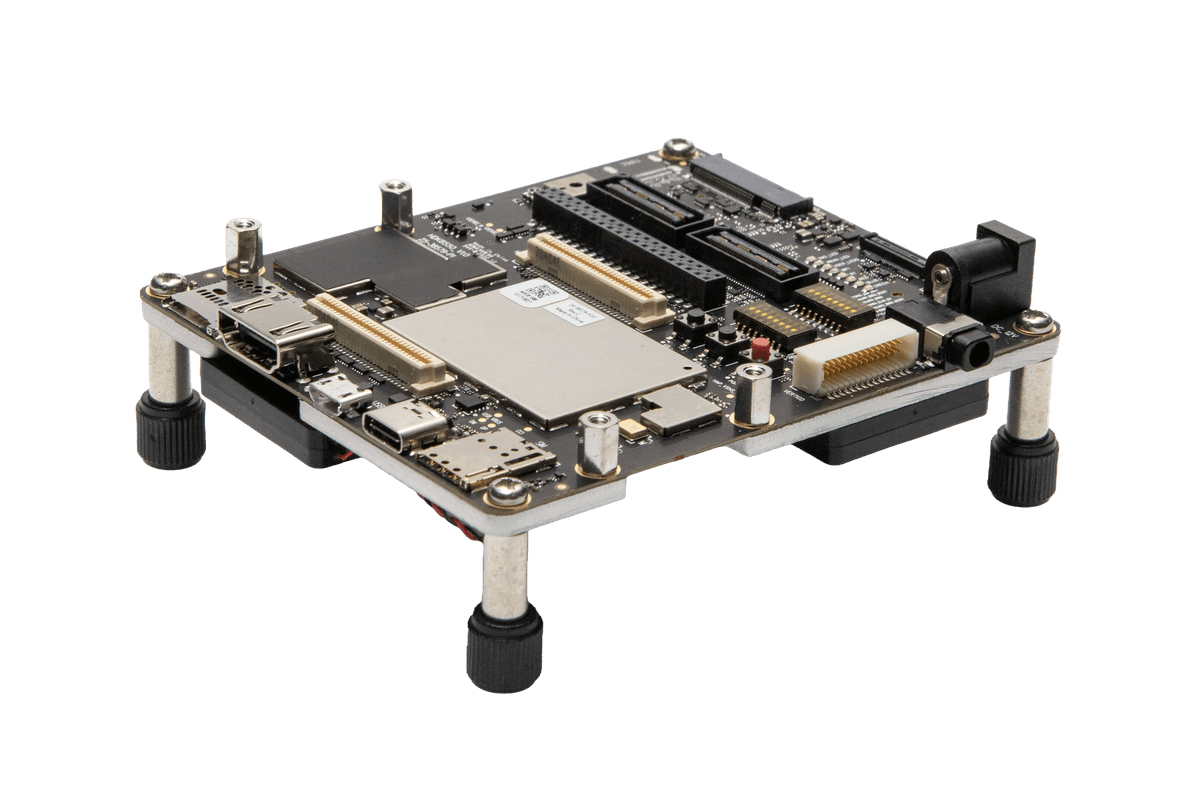
Qualcomm Robotics RB Series
Production-grade camera drivers for Qualcomm Robotics RB5/RB6 platforms, enabling multi-camera stitching, synchronization, and advanced ISP tuning through the Linux CAMSS pipeline.
- Support for Qualcomm RB5 / RB6 (QRB5165)
- V4L2 Sub-device Registration
- Multi-camera Synchronization
- Flexible Device Tree Configuration
MIPI CSI-2 Driver Operation
SoCs like Qualcomm QRB5165 (RB5) integrate the CAMSS pipeline. In Linux, CSIPHY modules register as V4L2 sub-devices, allowing camera sensors to connect over MIPI CSI-2. Device-tree must correctly describe csiphyX, csidY, and camss-top nodes, along with sensor endpoints that define lane-configuration, link-frequency, virtual-channel mapping, and power/reset lines. Depending on board wiring and sensor setup, multiple cameras can be connected concurrently; synchronization, frame capture, ISP processing, and REST of pipeline follow standard CAMSS + V4L2 media-controller flow. For example, the official RB5 dev kit documentation shows multiple CSI connectors for connecting cameras (generic MIPI-CSI modules, or GMSL cameras), enabling multi-camera experimentation. However, actual supported resolution, frame-rate, and number of simultaneous streams depends on many factors: sensor output format, link-lane count, link-frequency, ISP load, memory bandwidth, device-tree pinout, and board power/thermal design. While high-resolution (e.g. multi-megapixel) and multi-camera setups are used in practice, it is incorrect to assert a universal guarantee (e.g. “4K120”, “48 MP burst”, or “unlimited multi-cam sync”) — these depend on the specific sensor + board + driver configuration.